Category Archives: This Site

Web site redesign – continues – December 27, 2019

Content is moving around, and off-site to my other modelling related website to simplify the purpose and the mission of Andrew’s Trains.


Simplification

I’m in the process of transferring all of the modelling related content off site to my modelling related pages on my personal website. THe aim is to keep layout designs here and all other content including the modelling articles there. That will take place during the first quarter of 2020. I aim to be layout designs only by April 2020.


Where will it go?

All of the modelling content will be transferred in stages to:

https://martinfamilyweb.wordpress.com/go/modelling/trains/

It’s a work in progress. However I’ve written up an new landing page for the VR GY wagon series as well as a part 2 of the build process this couple of days off. So you can head on over there to read more about that process. More information on the build was requested by a couple of readers and I apologise for the delay in getting that completed. Life has been busy, and my time is limited. But it is getting there.

I’ll keep you advised as things change and changes to both sites rollout.


Resources

Interested in keeping in touch or discussing posts, pages and ideas? Connect with us on the Andrew’s Trains page on Facebook

Site Update – Redesign underway

Hello regular visitors. If you’ve not visited recently you’ll note that I’ve redesigned the menu structure, as a start to a major redesign of the site…


Change is in the air

We’re moving from the country back into the city, I’m looking at new opportunities and trying to understand the future for this site. While I’d like to put more time into Andrew’s Trains, I need to make sure that I’m feeding, clothing and ensuring the emotional and financial survival of my family first.

My goal was to have grown Andrew’s Trains well beyond where it is at the moment. Over the last month I’ve put a lot of research into the site’s numbers to see whether it is time to put Andrew’ Trains on the back burner and work on other ventures. My time is a finite and highly valuable resource and I simply cannot afford to spend it here when the returns just aren’t coming.


Survey

To see how invested you are in the Andrew’s Trains concept I’ve created a quick survey (available here https://survey.fm/E327EDAC92673EDA). If you’re interested in Andrew’s Trains take the survey and let me know what I need to do to make this information channel a better value to you.

The Andrew’s Trains channel won’t go away. But the level of work to post and update won’t be there while I move onto other things. Let me know what you like or don’t like through the survey.


Menu Changes

I’ve simplified the menu structure to make less upper level items, and deeper menu options underneath. Everything is still there, grouped logically under either:

  • Articles
  • Galleries, or
  • Layout Designs

If you are looking for something in any of these categories please choose one of the three and drill down to what you are looking for.


Resources

Interested in keeping in touch or discussing posts, pages and ideas? Connect with us on the Andrew’s Trains page on Facebook

Evans Hollow Industrial: Build Update

Yeah. It’s been a while. Don’t worry, it’s me, not you.

So what’s been happening on the layout of late? Not a whole lot to be frank. We’re in the middle of packing prior to a move back to Melbourne (Vic not FLA). As a result I’ve been clearing, cleaning and packing, books, models, tools and so on, while still trying to fit in holiday time and work.

I’ve not been completely idle; just short of available time to write and blog and post stuff. I’ve yet to complete Part 3 – building trestles – but it’s close. For now I’d love to give you a quick update on where I’m up to: putting down cork and track laying.

As shown in previous posts the track outline, feed points, frog wiring and so on is drawn on the foam prior to lifting all of the track and prepping for cork to go down. A couple of weeks ago I got the mainline, and the spur into scrappy’s completed one day. Then sanded the entirety of the laid cork to get it smooth.

Here’s an overview of what that looks like to date:

Click on the image to go full size. The spur into Scrappy (lower right) had two separate heights of cork laid. The higher one for the mainline and the thinner one for the spur itself. They were then sanded (power) to blend them in so that the spur drops from the mainline to the spur height and on the end of the spur I sanded it right down to the foam height as I want to have the track disappear into the scenery here.

You’ll note that I’ve dug the trenches in the foam for the wire-in-tube switching for the turnouts. These will be operated by double pole – double throw switches from beyond the end of the baseboard. These will be wired from under the board and will switch frog polarity also. Some more images of this below:

I’ll sign off for now. I’m expecting an enforced period of recovery later in the week, where I hope to get more work done on the layout. I aim to be at running status before we move in late november so I’d better get my tail in gear.

Later gator

Andrew


Site Seeing – Books on Operations (Real and Model)

I talk a lot about operations for model railroads. There are many reasons for this. Primarily I urge railway and railroad modellers to consider this aspect of the hobby because it allows greater play value – no matter the size of your layout space.

Today while packing for our upcoming move I got to my operations section. Two books on my shelf stood out and I wanted to share them with you. One focuses on the prototype, the other on the model. Both enlighten on their own the mysterious world of operation. Together they provide a great insight (at least to me when I was learning) and compliment each other in helping you understand how operations works.

The Railroad – What it is, and What it does (The introduction to railroading)

By John H Armstrong
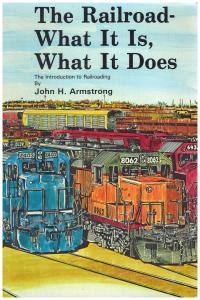
Everything you ever wanted to know about railroads (*or railways for that matter) is in this book. Ans as a railroader primer, it gets you inside the industry quickly and explains the why and what in clear easy to read language.

Starting from the absolute basics of how trains evolved to using the flange, through train speeds and the reason for trains, and not individual cars, you’ll soon find that you are on the inside, rather than struggling to understand.

Keep in mind that this is only the beginning of the rabbit hole, that is the railroading industry, but what a great way to start your journey. My version covers me though to my operating period.

The newest version (which I have yet to buy – waiting on some of those books to sell!) covers equipment to procedures and marketing to maintenance.  Amazon’s blurb says: “This book is ideal for novices and experts alike. The easy-to-read narrative presents a brief history of railroading from the coal-fed ‘iron horses’ that helped build a nation to the latest generation of EPA-compliant locomotives. You’ll also find current information on new technologies such as ECP brakes and computer-assisted transportation systems. The fifth edition is a resource for anyone wanting to learn about modern day railroads. The book delves into many facets of the railroad industry including such topics as freight cars, locomotives, track, signal and communication technology, intermodal traffic, operations, labor relations, and design engineering.”

If you don’t have a copy – go get one. Simple as that. It will make your understanding of the railroad and your ability to see beyond the layout so much better.

Operation Handbook – For Model Railroads

By Paul Mallery
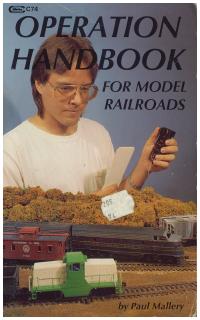
This book is (in my opinion) the best of the readily available model railroad operation books. Are there others out there? Sure there are. Tony Koester has one, but I feel it is merely a glossary for the better works of Paul Mallery and Bruce Chubb.

Paul Mallery’s books provides a complete handbook for running a realistic model railroad. It covers every aspect of operations, including timetables, orders, signals, waybills, communication, passengers, freight, locomotives, and MOW.

At 200 pages with a full index I highly recommend it to you if you want to put the learning from the first book, onto the layout.

Resources

The other book to which I’ve referred above for the modeller is:

  • How to Operate Your Model Railroad by Bruce A. Chubb.

I believe that this is the best of the model railroad operations books available. Getting a good used copy is difficult, very worthwhile though.


Evans Hollow Industrial: Build Update

Wanted to share some photos of the new layout build. I’ve been preparing, and where I needed to, buying wiring materials to complete the major wiring. More…


The layout – as built

Here are some more images of the layout build as it stands at the moment. You’ll note that the layout is freestanding, resting on trestles (hand built with simple woodworking tools in my garage – more on that later in another post).

I’ve included the final trackplan; it’s important for me to point out that you can plan forever on screen, but while ever you don’t take the plan to the baseboard I really cannot see what I have and what I need to do to make the layout visually appealing (well at least that’s how it is for me).


Track laying

When I begin to lay out the track I print out the track plan, and using a grid marked out on the plan and layout board, begin to match up the plan to the layout.

Then I mark up the top of the layout surface (in this case 2″ blue foam) using a pencil to mark the outside of the ties. This enables me to positively place the cork where I need it to be once the track is removed, drill holes for feeds and frogs, and although not shown in these photos mark out the sub-terrain ‘rod in tube’ locations from the tie bar to the front fascia of the layout.

These markings allow me to dig out the foam before installing the cork, drill the holes in the fascia and install the tubes in place using hot glue. There’ll be a post on that too in the not too distant future for those that may not know about this switch operating method.


Wrap up

That’s it for this post.

I’m finding that time to write posts is really short at the moment – work is an all consuming animal as we live 120 Km from where I work – so I’m adding 4 travel hours a day to what is an already 9-10 hour day. Looking forward to moving back into Melbourne later in the year which will give me a lot of time back in my life.

I have three weeks of holiday coming up in 1 week batches over the next 6 weeks – looking forward to that and to getting more photos and posts out to you all.

Next week I’ll be working broken shifts and will be working on posts covering these topics:

  1. Layout Build Part 3 post on building Trestles,
  2. Track laying,
  3. Switching infrastructure (rod in tube), and
  4. Wiring.

I hope that you’ll ask any questions that you have either here through the comments, or on the facebook page.


Resources

Interested in keeping in touch or discussing posts, pages and ideas? Connect with us on the

Andrew’s Trains page on Facebook

Site Update – New Gallery – Pyke Brush Cutter

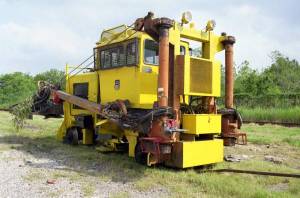
A new gallery has been posted covering a very unique piece of UP M.O.W equipment I found back in 2000 on Austin’s Bergstrom Lead. This comes about because of a post on the MRH website where member cr9617 is modelling one in HO scale.


Not something that you see every day

Maintenance of Way equipment is a fascinating field of study and I was very pleased, as well as lucky, to have caught this piece of equipment on the Bergstrom Lead back in 2000.  (It is hard to believe that these digital images are almost 20 years old as I write this – where has the time gone?)

To view the gallery click here, or use the menu and hover on the Galleries > USA > Austin, Texas, Pyke Brush Cutter and click the last pop-out. Enjoy and leave a comment if you can.

Site Update – The 2018 year in review edition

Earlier this year Andrew’s Trains passed the 100,000 individual views mark. I was very pleased at that result. You can read more by clicking the link above. With the start of 2019 I wanted to review the year that was at Andrew’s Trains, and see what insights came to light.


The year that was

2018 was a good year. Of note have been that the small layout designs have been of greatest interest to those visiting. Of note:

  • Just over 32000 hits on the blog, and
  • Almost every month was bigger than the year before (which is good)

Insights show that most people are still looking at the layout designs. So that will give me the focus for this year.

The year that will be

During 2019 I’ll have a couple of projects that I want to complete. These are:

  • More modelling and scratchbuilding – kitbashing/modding – articles including completing all the outstanding/started but not finished freight car projects,
  • Updating all the small layout designs with their own pages and a written operating plan to help readers understand their design and operation, and
  • Chronicling the design and build of my own small layout (8′ x 1.5′  – 2400mm x 450mm) shunting layout, with off-board staging.

I’ll be uploading more sketched ideas, and less of the computer generated designs than I have in the past. This is simply down to time, as in I don’t have enough of it to spend on learning new software packages while not having enough time to model. With my work as a tram driver I just don’t have the spare time to devote to any hobby that I’ve had in the past working regular 9-5 jobs.

I’ll be finishing the current XAF10 Railbox series of articles and complete the build articles that I’ve been working on for quite some time for the Victorian Government Railways ‘GY’ wagon build, and any other outstanding articles completed too.

Thanks for coming back and thanks too for those of you following the channel. You are the reason I’m doing this. I love sharing my skills, tools and ideas and all I hope is that you get the bug and start to build and operate. All the best.

Andrew Martin

Site update: new tool section – punch and die tools

On one of the forums (fora?) that I inhabit the subject of punch and die sets came up. While answering the ops question about the punch and die sets I use, I thought it was time I write more about the tools I use and so with some spare time on my hands today I wrote a new section under the tools section for these highly useful, if not often talked about, tools. More below…


The tools


There’s four new pages, one master page, and one for each tool listed below:

  1. Beading tool – for making rivets and bolt ends,
  2. Hexagonal punch and die – for making bolt heads, and
  3. Waldron’s punch and die sets (plural) – for making washers, panel overlays, cutouts, and anything else you can think to use them for.

Resources


To reach each page you can use the menu at the top of the page (modelling articles > tools ‘n’ tips > Punch and Die tools > choose an option), or click from the links below:


A note on safety


When using any tool, but especially those that cut or punch make sure you are wearing eye protection at all times. Small parts can and will fly into your eyes if you are not careful. I’m not responsible for any damage to you or others from using the information presented here.

Site Seeing – Sebastopol Shops RIP Track 2

It’s officially Australia Day so I thought I’d share more work done weathering the Southern Boxcar underframe and sides. It’s interesting to see how the added brake gear (see more about that here) has become just another part of the model, and no longer seems to dominate the underframe, just as I had hoped it would.


Southern Boxcar 36188

I’m relatively happy with the work so far. There is work to be done on the patches to tone them down “just” a touch.

Beyond that though the underframe weathering is what I now consider to be just right (considering that it will be hard to see). I had to add a bright white background behind the model for it to show up.  Very pleased with how this work has come out. It looks perfectly functional, and most importantly, looks the business.

I’ve weighted the model appropriate to my needs (that’s roughly the cube root of the on rail weight). This is heavy by the ‘normal’ standards, but with the Kadee sprung and equalised trucks under them my cars run like dream.


Tasks remaining

  • Rust spots need adding on the side, especially on the sliding door (right) side of the car as this area takes a real beating in service. There’ll be less on the left side. I’ll be using Ken Patterson’s oil weathering process, as outlined in the video in the resources section below. I’ve not used this particular method before so it will be interesting to see how it works for me. I’ve weathered in oils before and enjoy them very much, this will be one new technique for quick and dirty rust weathering.
  • The roof needs to be attached to the car and I’ll be weathering it to match the side weathering. I always do the sides before I do the roof because much of the run off ends up on the car sides.

Resources

Ken Patterson’s Oil Weathering method:

Sebastopol Shops Update – More Brake Mods

Work has been busy and I’ve not had much time to model, however I did get time yesterday to begin the weathering process on a couple of car underframes that have come through the brake rod upgrade program. Pictures below…


Southern 36188

An E&C Shops kit this PS-1 50′ single door boxcar has been in the shops recently for brake rodding updates. With the deeper side sills it provides a good view of what I’m trying to achieve through the upgrade program – adding ‘something‘ between the bottom of the car and rails.

From a lower point of view the rodding detail on this car disappears into the background clutter of hard angles and shadow (image taken in reflected sunlight on my workbench – late afternoon – with nice and flat tones)

Taken at normal railfan height the rodding is there and fools the eye, at least my eye, into believing that this is a super detailed car. Rolling by you’d never guess anything otherwise.


XAF10 class prototype car

Work continues on the XAF prototype car, an Athearn Blue Box kit. I’ve had my concerns throughout the upgrade that things would stick out like a sore thumb. I needn’t have worried. I like what’s emerging.

This is the car with all brake rodding work completed. I was worried that the brake rodding would be too obvious using the 20 thou brass.

After applying the base of the undercar weathering the experiment has borne sweet fruit. This looks much more like I wanted it to look. Same lighting and location showing the hard angles and shadows. Once on its wheels and with further weathering applied the rodding will disappear into the background, yet have that wow factor as it goes past.

Thanks for stopping by. Comments? Questions? Let me know.