Category Archives: Operations

Focused on operational aspects of layouts

Operations on a Maintenance Centre Layout (Part 2 – Ops Plan)

This is the second of three posts on maintenance centre layouts, that started with Aaron Riley’s Metra service centre layout.  In this post, I’m focusing on developing an operations plan that suits that layout. This involves working through background information on the prototype, its operations and the methods they use to get train sets out of the yard and onto the main for timetable services.


Developing an Operating Plan

On a layout designed for operation, the focus is on mimicking only those prototype operations that suit your interest. On a small switching layout, I don’t want to do paperwork, attend staff meetings, or write reports for senior managers when I could be switching. Your choices may differ obviously so knock yourself out writing those reports, while I keep switching.

On a layout such as Aaron’s, his focus would be on servicing the train sets. What I’m defining as a train set is:  “a locomotive and a ‘number’ of bi-level commuter cars“.
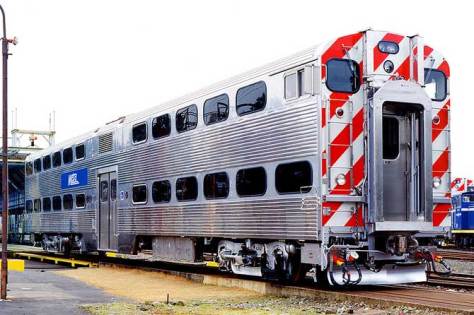
Photo 1: Gallery Type Bi-Level Passenger Car for METRA (Image credit: Nippon Sharyo,Ltd.)

I’m guessing that in Aaron’s space that number will be in the range of 3 to 4 cars maximum. A train with a larger number of cars would overwhelm the space available and cause switching issues that could not be overcome. It is worth keeping in mind that when you design operations for small layouts, siding lengths are the key to play value. Too much train or too short a siding or spur and operations grind to a halt. The key takeaway is: ‘design operations to the size of your layout’.

Some prototype background information

The core of real-world transit operation planning is to keep passengers moving, and paying. To do that the operations department, the people responsible for staffing and operating train sets in passenger service, focus on ‘availability’. Availability means a train set is available to run a timetabled service. Each timetabled service has a ‘run or train number’ which you’ll find in the employee timetable. Occasionally you’ll find these in the publicly available timetable, but this is rare.

Ideally, operators want 100 per cent availability, which means that all trains run according to the timetable; reality is not often this simple. Locomotives, passenger trains and the infrastructure they rely on (tracks, signalling, etc.) are complex machines requiring much care and attention to maintain peak operation.

In addition, there are also external factors beyond the operator’s control, such as pedestrians and motor vehicles interfacing with the right of way, natural and unnatural events, and things simply don’t always go to plan.

Prototype practices drive model operations

Prototype operator’s work using a decision hierarchy focused on quick turnaround. This ensures that timetabled trains run, thereby maximising availability. Understanding the prototype’s decision hierarchy helps in designing a modelling operations plan. You don’t need a complete understanding of the process to make sense of it.

A simplified view of the decision tree can help guide how we operate a layout of this type. I’m greatly simplifying the process and not accounting for regular mechanical examinations however, the prototype operator will use a decision tree similar to that presented below.

Working the decision tree to understand operations

Situation: A train set arrives back into the facility after its assigned run at the end of the day or shift. The operations management staff (called Starters, or Officers Production [OPs] here in Australia) will then run through the following decision tree to assess the status of the fleet assigned to their location to ensure availability and to plan maintenance and cleaning activities to meet future availability needs.

  • Step 1 – Is the train set in working order and is it ready to run out now:
    1. Yes, go to STEP 2, or
    2. No, go to STEP 3.
  • Step 2 – If the answer is a ‘YES’ what is the next step for the train set:
    1. If needed for a timetabled service, the train set runs out of the yard and onto the network, go to END
    2. If not needed for a timetabled service, the train set is placed onto a storage track ready for its next use, go to END
  • Step 3 – If the answer is a ‘NO’ what is the needed step to get a train set ready to run out:
    1. If it is in need of cleaning, clean it, then clear it for service, go to STEP 1
    2. If it is need of minor (running or regulated interval) maintenance (sanding, fuelling, replacing lights, fixing a seat, etc.), perform the maintenance, then clear it for service, go to STEP 1
    3. If it is in need of mid-level (out of service local specialist shop) maintenance, cut out the car or locomotive and move it to the service track for repair, then clear it for service, go to STEP 1
    4. If it is in need of major (heavy out of service upstream) maintenance, cut out the car or locomotive and transfer it to the upstream maintenance centre, and await its return, go to STEP 5
    5. If the train set is ‘short’ (as in missing a car, or cars, or a locomotive), combine a spare car or cars, or a locomotive to form a full set, then clear it for service, go to STEP 1
  • Step 4 – For cars or locomotives received from the upstream maintenance centre, determine:
    1. Is the car or locomotive needed immediately for a ‘short’ set
      • Yes – Switch the car or locomotive into the short set – go to STEP 1
      • No – Switch the car or locomotive to a storage track – go to STEP 5
  • Step 5 – return to STEP 1 and apply to the next train set

Rinse and repeat for each train set, locomotive and car until the answer at step 1 is YES.

I have not included mandated FRA mandated safety checks (or your local version thereof) into the operating plan; you certainly can do so. it is another level of operations and adds to the complexity of your switching operations as locos are pulled from service at their periodic intervals.


What’s in the next post?

In the next post, I’ll focus on game theory and how it can improve small layout operations for the long term.


Resources

Staying in Contact

Interested in keeping in touch or discussing posts, pages and ideas?  You can do that in several ways:

Operations on a Maintenance Centre Layout (Part 1 – Facility Types)

This is the first of a three-part series of posts on maintenance centre layouts, that started with Aaron Riley’s Metra service centre layout.  In this post, I’m focusing on helping you understand the types of prototype passenger facilities (or depots in Australian parlance) with which I’m familiar. Providing an overview of their services and facilities and where and how they fit into the passenger rail network.


Understanding what we’re modelling

After looking at Aaron’s interpretation of Rob’s design I noticed a lot of variances from what I see at work each day. In this post I’ll show how you can adapt Rob’s design to better fit your needs, if like Aaron, you are focusing on passenger rail maintenance centres in a small space. Aaron’s layout focuses on modelling a mix of running and maintenance facilities rather than the heavy maintenance facility indicated in Rob’s original design. This is because he is modelling a location that has complete train sets waiting for use, as well as the minor maintenance facilities

By modelling the less specialised running depot, rather than the tightly focused Super or Heavy Maintenance centre opportunities for operation are available which might be missed by focusing solely on the upstream maintenance facilities.

Understanding these opportunities for operations on your given choice of layout come from understanding the scope of work that is able to be carried on a maintenance site, and therefore when a transfer (off layout) is required to a heavier maintenance facility. This understanding assists in the operating design and will add to the long term enjoyment of the model. Without losing sight of the fact that this is a small layout design, let’s focus on making the most of the space within the footprint of Rob’s original design by looking at the three types of passenger rail facilities with which I’m familiar and how each affects the size and operations possibilities of a layout.

There are other types of specific maintenance facilities (beyond the scope of this article) which we’ll look at later in the series. These I classify as rebuilders, scrappers, and leasers (think Larry’s Truck and Electric of McDonald, OH), that are large sites, usually in old railroad shops and simply too large for the small layouts I prefer to own, operate and design. In this vein, however, there are some smaller outfits such as McHugh Locomotive and Equipment that specialise in niche locomotive services for industrial, short-line and regional railroads as well as heritage, historical and vintage. I’ll link all of those in the resources section below.

Depot types

There are three types of passenger rail depot with which I’m familiar:

  • Running depots,
  • Maintenance (a.k.a. super) depots, and
  • Heavy maintenance depots.

Each type of depot fulfils a different role for the rail network. Primarily they allow the most efficient use of operational, technical, mechanical and overhaul capacity to keep trains running, and people moving and paying.. You as a modeller should keep in mind that the prototype site may contain more than one type of depot. So for example a super or heavy maintenance depot may also have attached to them a running depot. These can be modelled together (if you have the space), or individually depending upon the space available to your layout. We’ll look at the different depot types and what in general they contain; before we do we should understand that while each type of depot has unique functions and infrastructure, they also have things in common such as:

  • Staff amenities for train crew, maintenance staff, cleaners,
  • Administration/Office buildings
  • Sanding infrastructure and storage,
  • Cleaning infrastructure for external cleaning (a carriage/loco wash), and
  • Cleaning staff for internal carriage and locomotive cleaning which includes buggies to get around the site, cleaning carts, sanding vehicles to top-off sand for individual passenger cars, grey and black water drainage facilities, and so on.

Within a footprint similar to Rob Chant’s original layout design for a passenger rail operation you are not going to be able to fit anything other than a running depot. And really with my preferences, I’d prefer to see a large range of train sets on the layout moving about. Having said all of that, let’s look at the different types of rail depots that I am familiar with.

Running Depots

Running Depots focus on getting units out the gate and onto the network. As such they have a small maintenance staff, performing minor fixes and repairs that assist in keeping units on the road. The maintenance staff also cover off periodic running inspections. For higher/major level maintenance and repairs, whole trains or individual cars are transferred to higher-level maintenance centres for action.

Maintenance (Super) Depots

Maintenance (Super) Depots are the next step up and provide a means to perform heavier programmed maintenance of units. They will also perform minor accident, and easily performed system repairs and part swaps. It should be noted that you’ll often see contractor vehicles onsite at these locations (especially in the modern context to service HVAC, and other managed systems on units. One thing that I’ve not seen in facilities of this type are overhead cranes. These tend to be found only at the heavy maintenance centres. Super depots simply aren’t focused on these heavy industrial repairs, so there is no point in spending money when it is not required.

The facilities at these depots, above and beyond those available at the Running Depot are in general:

  • Wheel lathes,
  • Bogie drop/swap-out facilities,
  • Major component swap out (HVAC, etc.),
  • Under-floor mechanical servicing and repair
  • Engine/traction motor repairs
  • Driver’s cab/passenger saloon furniture repair/swap facilities (seats, toilets, instrumentation, electronic components, and sub-system components and storage for the same)

Heavy Maintenance Depots

Heavy Maintenance facilities are, as the name suggests, where major overhauls are carried out. In general, this would include late-stage programmed maintenance requiring engine/traction motor swaps and rebuilds, bogie exchanges and rebuilds, car body rebuilds, and so on. The facilities at these depots above and beyond those available at both the Running Depot and the Maintenance (Super) Depot are in general:

  • Rebuild facilities for all subsystems (electrical, traction, car body, subframe, collision repair, etc.)
  • Commissioning facilities (for new units being brought into service)
  • Decommissioning facilities (for units being removed from service), including storage for salvaged components waiting to be reused

Other types of repair facilities

There are other kinds of repair facilities. Generally, these fall into the following categories:

  • Manufacturers: where cars and locomotives under a contract arrangement go for major overhauls, collision and other damage repairs, and end of economic life extension work and upgrades
  • Junkyard traders: Think Larry’s Truck and Electrics who buy bulk locomotive lots from the class 1 railroads before:
    1. stripping saleable parts from life-expired units for on-sale to refurbishment companies, re-use in refurbishing their own lease fleet, or direct part resale to their own customers
    2. cutting up what’s left of stripped units for scrap for resale to scrap buyers for (hopefully) a profit
    3. refurbishing working locomotives in good condition for lease or sale to regional and shortline customers, and
  • Specialty rebuilders: think McHugh Locomotive who deal primarily with industrial, and smaller shortline and regional customers, offering a full range of locomotive servicing, repair and rebuilding options (interestingly their plant has no direct rail connection, although they do have a long history of moving locomotives using large tractor-trailer rigs and a cool website and youtube channel, so there’s that too)

Specialty rebuilders are a topic all their own. And I promise to come back to this specific


What’s in the next post?

In the next post, I’ll be focusing on developing an operating plan to suit a layout running depot style layout. This involves working through how the prototype does its operations and the methods they use to get train sets out of the yard and onto the main for timetable services. But I’ll share more with you in that post.


Resources

Staying in Contact

Interested in keeping in touch or discussing posts, pages and ideas?  You can do that in several ways:

Aaron Riley’s Metra Service Centre Layout

This post is made possible by Aaron Riley. I’d like to thank him for his assistance, his time and especially for supplying the images of his Metra maintenance facility layout that I first saw on Facebook (more information in the resources section at the bottom of the post). Adapted from a Robert Chant design in HO scale, Aaron has executed an exquisite small layout that in the photos does not look small. Let’s take a look around his Metra Service Centre.


Rob Chant’s layout concept

In the original Facebook post Rob Chant commented that while he “hadn’t designed [a maintenance facility style layout] before, he thought it would be something that would extend his model railway design skills“.

He said further that he thought “the layout owner’s space would be a good fit with his design and could include a load of detail and some support structures.”

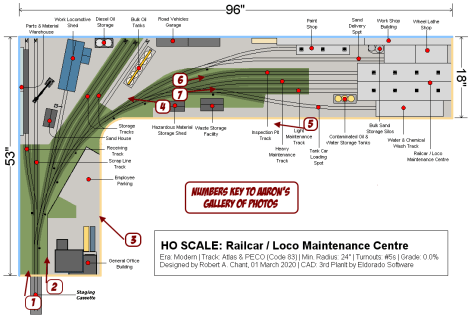
I heartily agree with both perspectives. Rob’s concept and the layout Aaron built from it are outstandingly good and show what can be achieved in a small space. And remember, as you can see from the plan below it is not a lot of space; the layout is only 8′ (2400mm) in total length; with a total width of 4′ 5″ (1346mm) and maximum board width of 18″ (450mm).

Rob Chant's original Track Plan with numbers keying to Aaron's gallery of photos
Rob Chant’s original Track Plan with numbers keying to Aaron’s gallery of photos

And there’s a lot packed into that small space. Yet it doesn’t look crowded; quite the reverse is true. It looks wide, open and has relaxed look about it. Lived in, even.

Enough of the overview let’s dive in.


Looking around Aaron’s Metra layout

Image 1: Looking into the layout from the fiddle yard

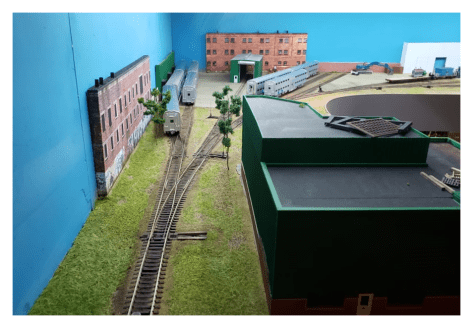
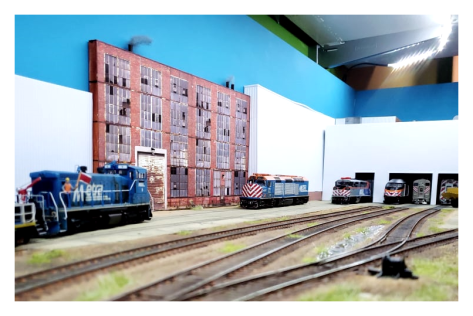
In image 1 above, you can see Rob’s use of the administration building as a view blocker ensures that the viewer’s eye is distracted where the layout ends, and the staging begins. It’s a great design feature. In addition, provides a verticality to what would otherwise be a flat, horizontal layout. it gives the viewer, no matter the angle of viewing, a framed view of the layout. It’s a thoughtful design feature that makes Aaron’s layout, and Rob’s plan a cut above.

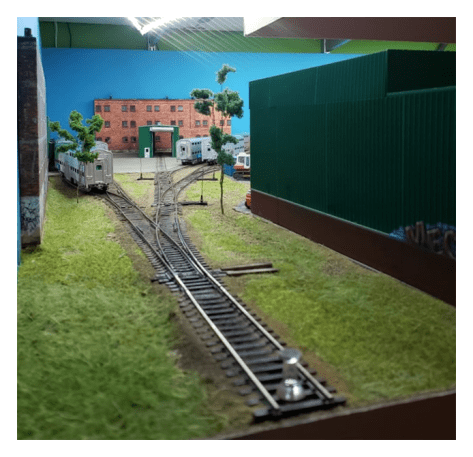
Image 2: Looking over the administration building toward the storage and engine tracks

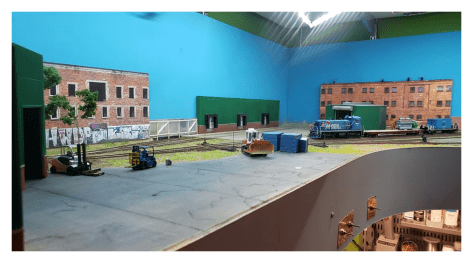
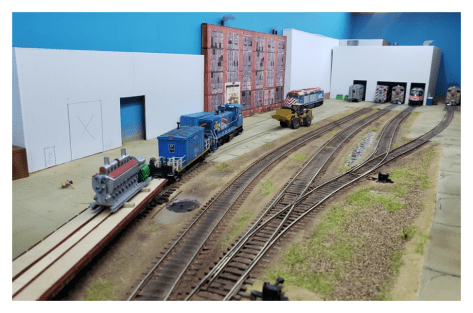
In image 2 above, it is interesting to note Aaron’s prototype solution to the problem of overcrowding and short sidings. You’ll note the three-car set is fouling the two cars in the siding. This is common where older facilities were designed for shorter cars. Things get put wherever they’ll fit. During late nights most running facilities like this one are crowded, with train sets packed in like sardines. It’s nice to see that modelled, even if Aaron did so unintentionally. It really adds to the believability of the scene.

Image 3: View from the administration building - note the details in Aaron's scenes
Image 3: View from the administration building – note the details in Aaron’s scenes

In image 3 above, what I noticed first was the sense of openness. Taken from the other side of the Administration buildings, it is great that Aaron has been able to achieve this and fool the eye and the mind on what is a small footprint layout. And there is a wealth of detail too. I love the cracked hard standing area, not overtly achieved. Subtle but unmistakable. It is really great work and carried across the layout.

Image 4: A Metra transfer run prepares to leave for the heavy maintenance centre with a tired motive power unit

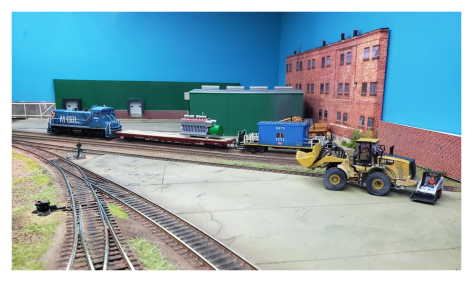
In image 4 above, what took my eye straight away was the photo-realistic building flat. It is an eye-catching feature. The prime mover looks to have just been loaded, as the tie-downs have yet to be fastened to the flatcar.  This transfer freight movement will be heading off to the upstream maintenance centre later where that prime mover will get a rebuild before being replaced into another locomotive. I’m impressed by how the scene has been dressed. With most of the buildings flat against the rear of the layout, wide-open space reigns. Cleverly done Aaron.

Image 5: With the maintenance centre behind you, it's amazing what you can fit in only 8 feet x 1.5 feet
Image 5: With the maintenance centre behind you, it’s amazing what you can fit in only 8 feet x 1.5 feet

In image 5 above, we’re standing roughly in alignment with the face of the maintenance centre buildings. No matter how many times I look at the scene, I just don’t see how it is not 16 feet long.

Image 6: Aaron's use of photorealistic buildings and large buildings add to the scale and apparent size of the layout
Image 6: Aaron’s use of photorealistic buildings and large buildings add to the scale and apparent size of the layout

In image 6 above we’re looking toward the heart of the maintenance centre. Cleverly Aaron has not tried to model the entire building, yet there is enough darkness to hide the fact that the buildings are not as deep as they appear to be. Once again, the height of the surrounding buildings, and the service centre, illustrate how even in a small space you can use the vertical to make things appear bigger than they really are. It is something I’ll be using on my current small switching layout when I get around to making the warehousing and other structures. Also, we see another of the photo-realistic buildings; with knocked out windows, rusty roller doors, and a run-down look from an earlier time. It grounds the newer parts of the layout and suggests a history we just haven’t heard yet.

Image 7: Aaron's use of tall photo-realistic and large new structures add to the vertical scale and complement the small footprint of the layout
Image 7: Aaron’s use of tall photo-realistic and large new structures add to the vertical scale and complement the small footprint of the layout

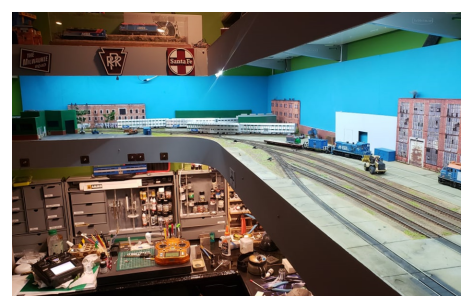
In image 7 above, you’ll note the uncluttered nature of the layout. There’s work going on here, but there’s room to get about, without bumping into things. This particular scene also shows the actual depth of the maintenance centre buildings, just a car length long. Not that you’d notice while switching. The layout ticks so many boxes for me in regard to how small layouts should be built. With thought and care not only in the design but also in the execution of that design.

I guess by now there’s no hiding it: I’m a fan of this layout. There is so much to learn from how Rob has designed and Aaron has built the layout. And there is much more that you can add to what’s already here. That’s for another post and another day, however!


What’s in the next post?

In the next post, I’ll show I’ll share my knowledge of the types of depots that passenger trains operate from in my experience.  It’s not something that is often discussed in the hobby press, or online groups. So if you have no idea what I mean by a running depot, we’ll cover that in the next post, and in the series of posts that follow.

Till next time; Andrew


Resources

  • Aaron’s original post on the Micro/Small Model RR Layouts group on Facebook – membership of the group required to access the post (and well worth it too!)

Staying in Contact

Interested in keeping in touch or discussing posts, pages and ideas?  You can do that in several ways:

An Australian RIP (switching) layout

At the Corio Model Railway show in 2017, I was lucky enough to catch this outstanding Australian switching layout. Owned by Ian Wilson of Ian Wilson Models (which is sadly no longer in business) this layout was simply outstanding. You’ll notice that the layout is completely self-contained, with no off layout cassettes or fiddle-yard.

Despite that, it had all the needs for a working layout including a run-around to allow the single locomotive to serve all facing and trailing sidings.

At 2400mm (8′) long by 600mm (2′) wide, it was a delight to see operate in the flesh. Sadly I was advised today, that the layout is (sigh), no more.

If you have any images of the layout or further information on it, I’d love to know. Please contact me through this site’s contact page (which send me an email), or on the Facebook page with details.

Enjoy the gallery of images.


Resources

  • None in this post

Staying in Contact

Interested in keeping in touch or discussing posts, pages and ideas?  You can do that in several ways:

Site Update – 26/03/2021

There’s a new section (Layout Design Basics) under the Articles menu. The first article there focuses on Inglenooks.


Layout design basics

I’ve added a new section on layout design basics under the ‘Articles’ menu. In the first page I’ve looked at the Inglenook. Bought about by the recent posts on the Montpelier, OH grain facility. Which is a double-ended Inglenook.

Inglenooks are a fascinating subject of study on there own, and really handy to come to terms with as a small layout designer since they can be used as a game, or in normal operating usage when switching your layout. All with the change of the number of cars on the layout.

There’s a lot of information on the page, and I’ve added links to the ultimate source of Inglenook knowledge too. Head on over to the page and check it out when you get a moment.


Resources

Staying in Contact

Interested in keeping in touch or discussing posts, pages and ideas?  You can do that in several ways:

Site Seeing – December 19, 2019 – The Open top car loading edition

Ever wondered how you should load an open top (think gondolas, flats, pulp wood racks, etc…) car. Well now you can answer that question thanks to Douglas Harding. Read on for more.


You’ve got to be a member

To get Doug’s file you have to be a member of the Ry-ops-industrialSIG at groups.io. This group’s primary mission is to discuss railway operations and industries and how to model them and  is the primary discussion list for the Operations SIG of the NMRA and the NMRA’s Industries SIG. So there are some operations heavy hitters here with the answers you won’t find elsewhere. It can get a little esoteric at times, but well worth the time spent here. If you are modelling the North American scene then this group is a worthwhile addition to your modelling resources.

Click this link to head over to the group home page. Complete the sign-up process and once you’re done click the link in the “Get the PDFs section below to download.


Get the PDFs

OK so now you’re a member, it is time to get the 2019 XMAS Goodies. Before you blindly start downloading though here’s what’s covered in the AAR Car Codes Open Top Car Loading Rules as supplied by Doug:

  • Section 1 Rules 1988.pdf
  • Section 2 Loading pipe part 1 1987.pdf
  • Section 2 Loading pipe part 2 1987.pdf
  • Section 3 Road Farm Equipment 1987.pdf
  • Section 4 Misc Machinery 1987.pdf
  • Section 5 Forest Products 1983.pdf
  • Section 5 Forest Products 1987.pdf
  • Section 6 DOD Military 1984.pdf
  • Section 7 TOFC Containers 1987.pdf

If you’ve not fallen asleep yet from too much eggnog, or the technical nature of this post, then Click this link to get to the PDFs. Happy reading and modelling.


Resources

This time around all of the resources are mentioned in the section above. Don’t forget to take part in the reader survey right now! Your thoughts and feedback will assist me in writing and presenting more of the content you want to see.

Click here to take part in the survey.

Interested in keeping in touch or discussing posts, pages and ideas? Connect with us on the Andrew’s Trains page on Facebook
Site Seeing – The Operations Gold Mine Edition

Seeing how others conduct their operations, and their session is a valuable learning tool. Visit the Burnt Hills and Big Flats railroad for some great ideas and examples.


The Burnt Hills and Big Flats Ops Site

Steve Prevette’s layout is a great layout in its own right. Beyond that he’s made it a great example of how to operate also. Of more importance, I think, is his willingness to share his operating information online.

His site (listed in the Resources section below) shows thoughtfulness and planning. There’s overviews, details and instructions and in all it is an excellent site to see how things “should, and “can” be done for a layout large or small.

I hope that you enjoy reading the information presented by Steve as much as I have.


Resources

Interested in keeping in touch or discussing posts, pages and ideas? Connect with us on the Andrew’s Trains page on Facebook
Evans Hollow Industrial: Build Update

Yeah. It’s been a while. Don’t worry, it’s me, not you.

So what’s been happening on the layout of late? Not a whole lot to be frank. We’re in the middle of packing prior to a move back to Melbourne (Vic not FLA). As a result I’ve been clearing, cleaning and packing, books, models, tools and so on, while still trying to fit in holiday time and work.

I’ve not been completely idle; just short of available time to write and blog and post stuff. I’ve yet to complete Part 3 – building trestles – but it’s close. For now I’d love to give you a quick update on where I’m up to: putting down cork and track laying.

As shown in previous posts the track outline, feed points, frog wiring and so on is drawn on the foam prior to lifting all of the track and prepping for cork to go down. A couple of weeks ago I got the mainline, and the spur into scrappy’s completed one day. Then sanded the entirety of the laid cork to get it smooth.

Here’s an overview of what that looks like to date:

Click on the image to go full size. The spur into Scrappy (lower right) had two separate heights of cork laid. The higher one for the mainline and the thinner one for the spur itself. They were then sanded (power) to blend them in so that the spur drops from the mainline to the spur height and on the end of the spur I sanded it right down to the foam height as I want to have the track disappear into the scenery here.

You’ll note that I’ve dug the trenches in the foam for the wire-in-tube switching for the turnouts. These will be operated by double pole – double throw switches from beyond the end of the baseboard. These will be wired from under the board and will switch frog polarity also. Some more images of this below:

I’ll sign off for now. I’m expecting an enforced period of recovery later in the week, where I hope to get more work done on the layout. I aim to be at running status before we move in late november so I’d better get my tail in gear.

Later gator

Andrew


Site Seeing – Books on Operations (Real and Model)

I talk a lot about operations for model railroads. There are many reasons for this. Primarily I urge railway and railroad modellers to consider this aspect of the hobby because it allows greater play value – no matter the size of your layout space.

Today while packing for our upcoming move I got to my operations section. Two books on my shelf stood out and I wanted to share them with you. One focuses on the prototype, the other on the model. Both enlighten on their own the mysterious world of operation. Together they provide a great insight (at least to me when I was learning) and compliment each other in helping you understand how operations works.

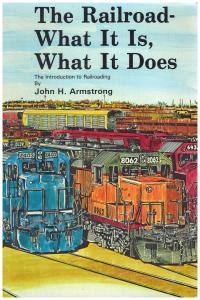
The Railroad – What it is, and What it does (The introduction to railroading)

By John H Armstrong

Everything you ever wanted to know about railroads (*or railways for that matter) is in this book. Ans as a railroader primer, it gets you inside the industry quickly and explains the why and what in clear easy to read language.

Starting from the absolute basics of how trains evolved to using the flange, through train speeds and the reason for trains, and not individual cars, you’ll soon find that you are on the inside, rather than struggling to understand.

Keep in mind that this is only the beginning of the rabbit hole, that is the railroading industry, but what a great way to start your journey. My version covers me though to my operating period.

The newest version (which I have yet to buy – waiting on some of those books to sell!) covers equipment to procedures and marketing to maintenance.  Amazon’s blurb says: “This book is ideal for novices and experts alike. The easy-to-read narrative presents a brief history of railroading from the coal-fed ‘iron horses’ that helped build a nation to the latest generation of EPA-compliant locomotives. You’ll also find current information on new technologies such as ECP brakes and computer-assisted transportation systems. The fifth edition is a resource for anyone wanting to learn about modern day railroads. The book delves into many facets of the railroad industry including such topics as freight cars, locomotives, track, signal and communication technology, intermodal traffic, operations, labor relations, and design engineering.”

If you don’t have a copy – go get one. Simple as that. It will make your understanding of the railroad and your ability to see beyond the layout so much better.

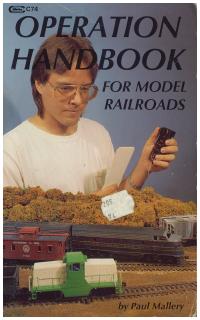
Operation Handbook – For Model Railroads

By Paul Mallery

This book is (in my opinion) the best of the readily available model railroad operation books. Are there others out there? Sure there are. Tony Koester has one, but I feel it is merely a glossary for the better works of Paul Mallery and Bruce Chubb.

Paul Mallery’s books provides a complete handbook for running a realistic model railroad. It covers every aspect of operations, including timetables, orders, signals, waybills, communication, passengers, freight, locomotives, and MOW.

At 200 pages with a full index I highly recommend it to you if you want to put the learning from the first book, onto the layout.

Resources

The other book to which I’ve referred above for the modeller is:

  • How to Operate Your Model Railroad by Bruce A. Chubb.

I believe that this is the best of the model railroad operations books available. Getting a good used copy is difficult, very worthwhile though.


Evans Hollow Industrial: Build Update (A name finally)

It’s nice to have the time to allow ideas to form in their own way, and in their own time. Deciding on a name with the new layout has been one of those journeys…


Finding a name

Tonight after dinner the family and I caught the end of my favourite movie ‘Field of Dreams’. I believe this movie is the ultimate Dad and son movie. The constant refrain in the movie is: ‘If you build it, he will come’. I’m under no illusion that my Dad will walk out of the corn field any time soon to spend time to operate with me. (I don’t have a cornfield, and I’m avert to cornfield meets in any case.) On the odd chance that he does walk out of the corn he’ll have a great time working the layout. So you know – there’ll be a complete post covering everything you’ll want to know about operating the layout in a future post – never fear.

I doubt that I would have my love of trains and transportation if it were not for my Dad. We were not a well to do family but my father made sure that I had a train set or two, including a Triang 00 scale Dock shunter set. We had our issues he and I, but then which father and son do not? Without his early influence I doubt I’d have had my life long passion of railway modelling and transportation.

My Dad (Evan Louis Martin) was a World War 2 veteran, suffering silently all of his life after service with PTSD. Passing through the veil in 1993 I will be celebrating him in October 2021 on his 100th birthday.

It’s fitting then that the man who started it all for me should have this layout named after him. After my ‘Field of Dreams’ moment last night I’ve decided instead on celebrating the man who bought me to my passion. So I’d like to welcome you to the Evans Hollow Industrial.

There’ll be another post on the layout soon, Part 3 covering the building of the trestles. All the best until then.