
I talk a lot about operations for model railroads. There are many reasons for this. Primarily I urge railway and railroad modellers to consider this aspect of the hobby because it allows greater play value – no matter the size of your layout space.
Today while packing for our upcoming move I got to my operations section. Two books on my shelf stood out and I wanted to share them with you. One focuses on the prototype, the other on the model. Both enlighten on their own the mysterious world of operation. Together they provide a great insight (at least to me when I was learning) and compliment each other in helping you understand how operations works.
The Railroad – What it is, and What it does (The introduction to railroading)
By John H Armstrong
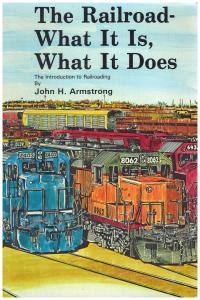 Everything you ever wanted to know about railroads (*or railways for that matter) is in this book. Ans as a railroader primer, it gets you inside the industry quickly and explains the why and what in clear easy to read language.
Starting from the absolute basics of how trains evolved to using the flange, through train speeds and the reason for trains, and not individual cars, you’ll soon find that you are on the inside, rather than struggling to understand.
Keep in mind that this is only the beginning of the rabbit hole, that is the railroading industry, but what a great way to start your journey. My version covers me though to my operating period.
The newest version (which I have yet to buy – waiting on some of those books to sell!) covers equipment to procedures and marketing to maintenance. Amazon’s blurb says: “This book is ideal for novices and experts alike. The easy-to-read narrative presents a brief history of railroading from the coal-fed ‘iron horses’ that helped build a nation to the latest generation of EPA-compliant locomotives. You’ll also find current information on new technologies such as ECP brakes and computer-assisted transportation systems. The fifth edition is a resource for anyone wanting to learn about modern day railroads. The book delves into many facets of the railroad industry including such topics as freight cars, locomotives, track, signal and communication technology, intermodal traffic, operations, labor relations, and design engineering.”
If you don’t have a copy – go get one. Simple as that. It will make your understanding of the railroad and your ability to see beyond the layout so much better.
Operation Handbook – For Model Railroads
By Paul Mallery
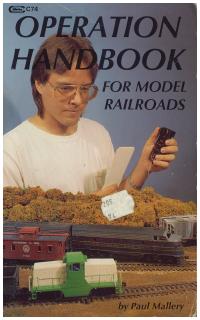 This book is (in my opinion) the best of the readily available model railroad operation books. Are there others out there? Sure there are. Tony Koester has one, but I feel it is merely a glossary for the better works of Paul Mallery and Bruce Chubb.
Paul Mallery’s books provides a complete handbook for running a realistic model railroad. It covers every aspect of operations, including timetables, orders, signals, waybills, communication, passengers, freight, locomotives, and MOW.
At 200 pages with a full index I highly recommend it to you if you want to put the learning from the first book, onto the layout.
Resources
The other book to which I’ve referred above for the modeller is:
- How to Operate Your Model Railroad by Bruce A. Chubb.
I believe that this is the best of the model railroad operations books available. Getting a good used copy is difficult, very worthwhile though.


 Site 1: Rob Hawkins’ Hobby Blog –
  Site 2: Rob Hawkins’ Hobby Blog –
  Site 3: Rob Hawkins’ Hobby Blog –
  Site 4: Rob Hawkins’ Hobby Blog –
  Site 5: Rob Hawkins’ Hobby Blog –

 I’d begun to get him into modelling at this stage and he’d made a couple of half-decent models. I asked him if he’d like help to get the models built and ready for paint. To his credit he said “I’ll be alright Dad” and promptly trundled off to the modelling table and began to put them together. Then things seemed to stall. I let it ride for a couple of months and then one day got the models out and asked him if he’d like some help to put them together to get this under way so he could start wargaming. Thus the problems came to light. Turns out that he followed the instructions to the letter putting the models together – using the glue supplied in the kit. And here is where the problems came to rest; the glue was woeful. It was not boy wonder’s fault. He’d followed the detail in the instructions to the letter. But the glue seemed to not want to hold and it had crystallised on the plastic. Gripping enough to not want to let go and not enough to hold the pieces together.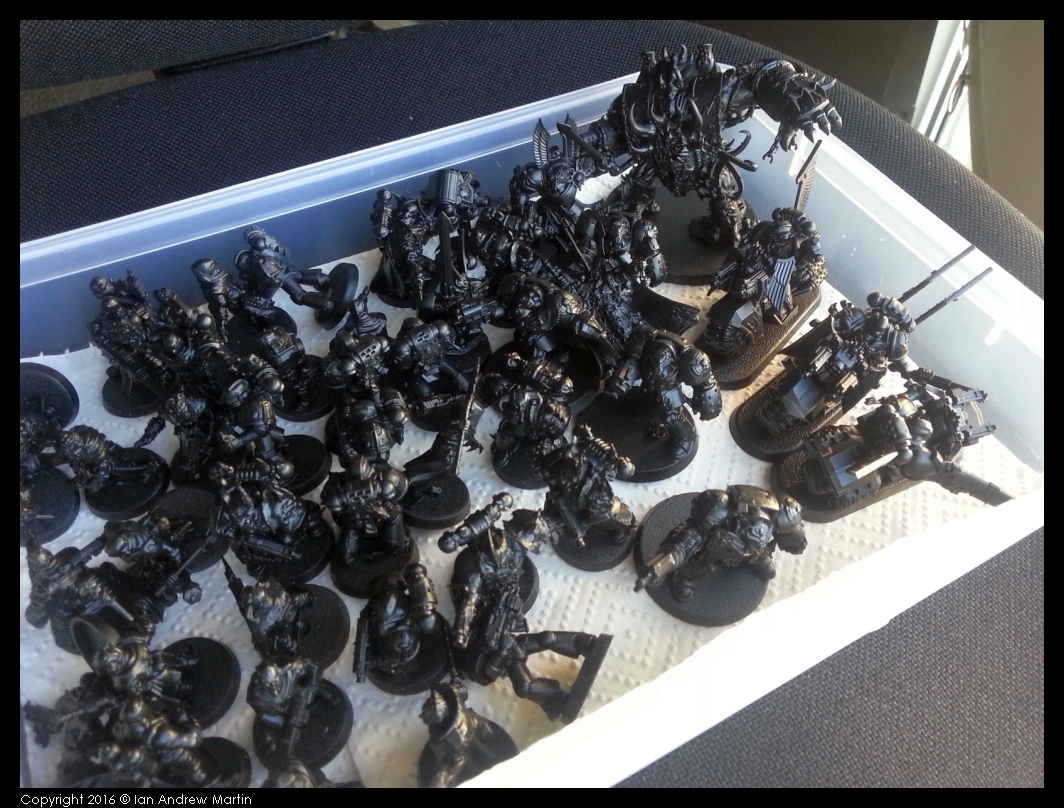

 Andrew's Trains