The difference that a few trees can make to a layout scene should never be underestimated.
Over on the Port Rowan layout blog Trevor has just completed the planting of trees at St Williams, where (unlike the original) the layout bends around the wall. use the link below and look at the two pictures on the page. There is certainly more than trees going on here, there’s light and shadow and a fence and some other additions to the scene.
But Wow! What a difference has been made by the addition of the tree armatures.
But wait, there’s still more. Check out his second post from a couple of days later: Link Here
Trevor now goes into the scene and really shows some of the visual differences the trees make. I’ve never met Trevor, and we live on totally different sides of the planet, but I feel tied to his style of modelling.
Hope that you are having a good evening where ever you are.
There are some who believe in Friday the 13th as a bad omen. I like to think of Friday the 13th as a good time to get things done while everyone else is cowering under their beds, waiting for the sky to fall.
Site 1 – Clear Iron (YouTube)
I just got through posting about the new Rapido RDC-1. If you are unfamiliar with this little cracker of a design enjoy this video from 1952 about the RDCs.
Site 2 – Trinity Railway Express (YouTube)
When we lived in Austin Texas we’d head on up to Dallas and Fort Worth every now and then so I could indulge my railfanning needs, which to be honest I never could really meet in Austin.
Of interest is the ex- B&M 6110 RDC-1 heading the consist of 3 RDC’s. TRE #2005, TRE #2006, and TRE#2007
Site 3 – US Budds (again from YouTube)
This much longer but just as interesting video takes a look at the US operators of RDC-1s including:
Belfast & Moosehead Lake,
Connecticut DOT/Amtrak (SPV2000’s),
Metro North,
Bellefonte Historical RR,
North Shore Scenic RR (Duluth),
Trinity Rail Express (Dallas area),
Reading & Northern, and
Cape May Seashore Line
Enjoyed a massive storm through Ballarat tonight, and now the temperature is dropping away. Hope the day has been great where you are.
I think that the RDC is a great addition to any layout. For those who model passenger operations anywhere from the late 1950s on, these little beauties fit right in. I believe that even in the USA they’re mostly gone now from day-to-day service.
Rapido’s new RDC-1
Thankfully they’re going to be remade by Rapido. And the work they put into this is amazing. Apparently they’ve scanned the real thing, and then worked off the scans and the blueprints to decide what was as-built, and what was in-service.
These cars also ran as is here in Australia. The Commonwealth Railways bought three of them for service in South Australia. I believe that ComEng (Commonwealth Engineering – Granville NSW) also built a set or two under license for use on the South Coast Daylight trains running from Sydney to Bombaderry (Nowra) and return daily but they never worked right for the NSWGR.
Eventually they had the motors pulled and became loco hauled (which is how I remember them in my youth on runs down the coast).
In chugging around their site I noticed that Rapido will produce units that are painted but unlettered. Hopefully this gets some of the Australian modellers interested.
They’re not cheap at CN$325 (especially with our rapidly sinking currency), however, I just checked and the Canadian Dollar is worth slightly less than ours at the moment (0.97 as of writing) so with shipping I’d expect landed costs to be under AU$375 mark..
There are some sites that I find myself returning to time after time. Vibrant sites with lots of new ideas and a great wealth of modellers, who love to share. My favourite message board is to be on and partake in is RMWeb.
There is always a project or layout build under way that has something to give you. Today I’d like to point out two projects on RMWeb that I find really interesting for a number of reasons.
Built in 7mm scale as a basic garage-garden-garage line; the garden section is in effect just a single track with a couple of sidings and scenery provided by mother nature. Control is planned to be a mixture of DCC and RC.
The Scenic modelled section is to be situated within the garage with a cassette fiddle yard on the other side. The garden will include a viaduct but be fairly basic for the sake of ease of building and getting something up and running quickly and to reduce maintenance.
The model depicts a small corrugated Goods Shed and two sidings, with the tail-end of the Head-Shunt also represented, the Loop being ‘off stage’ so to speak. This is a classic Inglenook type ‘shunting plank’ and will give somewhere to have some fun with ‘shunting puzzles’ and to test new stock whilst Down Ampney is being built.
Conclusion
While both are 7mm O scale layouts, the standard of modelling is very high, while the area and layout being modelled is small and simple. Lots of working potential too.
Well its a very warm day in Ballarat, and my son and I are off to the local pool. Hope you’re having a great day where you are too.
While I primarily model railways in HO scale and O scale, I do love sci-fi, and armour. In that vein today I wanted to share a site pointed out on Giant Freaking Robot Amazing Sci-Fi Ship Models Made Entirely Out Of Paper
These are not what you’d expect. And they all come with downloadable paper kits (I can see one or two of these becoming plastic models in the near future). Additionally there’s a build guide for each one.
Head on over to Uhu02 Paper Craft (in Japanese but google does a reasonable translation of it) and prepare to be gob-smacked.
Often I wonder how I can fit the layout I’d like to have in the space I have available.
Then there are the brave souls who decide to build an industrial switching layout in 1:29 G scale.
Losco yard
Losco yard is Hugh Flynn’s switching layout in 1:29 scale. I found this today while looking for something else entirely. But I like the design and the bulk of the models so much I thought it deserved to be brought to a wider audience.
Link number 1 is an older link from 2008 but shows a lot of photos and a track plan, along with some thoughts from the RMWeb community as to what could be done to make the operational value better.
Link number 2 is a newer version of the layout and some other work in progress. According to the owner, the layout has since been sold on.
Link number 3 below is a link to a video taken by a punter at one of the UK shows of said layout. Only 480P but it gives you an idea of the size of the models when you take a look at the video and realise that there are massive models. Note that the audio track is quite loud, so turning down your sound at work might be advisable.
The video runs from the start through to the 2:20 mark. Nice one Hugh.
Resources
There are some other nice photos on the modelrailroadforums page here:
I live very close to Melbourne in Victoria – home of the worlds largest urban tramway network in the world. The entire network covers 250 kilometres of track; has 493 trams, 25 routes, and 1,763 tram stops. Melbourne’s tram network is larger than the largest networks in Europe (admittedly not by much) such as those in St. Petersburg (240 km), Berlin (190 km), Moscow (181 km) and Vienna (172 km). What does all of this have to do with today’s site seeing post? Funny you should ask that question.
Site 1: Victoria Park
The first site I wanted to mention is Victoria Street (Link here). This great tramway layout has visited several of the model shows in my region and is a well thought out and small layout. Somewhere in my large collection of digital photos I have some of the layout. When I can find them I’ll post them up.
Site 2: Proto: 87 stores
If you’ve decided to model a tramway, you can use the track and switch components found on this page (Link Here) to make all that lovely street trackage. Now this is not just for tramways, any street railway can be modelled using these components. Very nice stuff.
Overcast and cool in Ballarat today. Hope you are having a great day where you are.
I’ve not seen this layout before, but being a fan of passenger rail, and really wanting to model a smaller (read portable) layout, I really rather like the look of Victoria Park. Take a look at this one I think that you will enjoy it.
I think I’ve settled on a plan and it’s time to start talking about it. As I mentioned in the title, I’m going to build a second version of Ian Futer’s Victoria Park plan. This was the same plan I used for the first of the micro layouts I built last winter. Here’s a quick view of the plan:
I’ve shared it before, but here’s a superb Youtube video of the layout in operation:
And, finally, a photo of what I built the first time: While it doesn’t show in my photo, the top of that baseboard wasn’t exactly level. This was more from my inadvertantly leaning on it than any structural issue with the foam core-based structure. Worse, the length of track designed to exit the board and connect to the staging sidings was some of the worst I think I’ve ever built and it was really almost too…
If you have not seen a tuning fork layout, it is a very simple 1 turnout operation. If you are still not seeing it in your mind, think of the letter ‘Y’. Most of the layouts I’ve seen assume either a mainline and a siding, or two sidings. However, that does not mean little operational potential. I found a video by Thornapple River Rail Series on YouTube [Link is below] this week and it got the creative juices flowing.
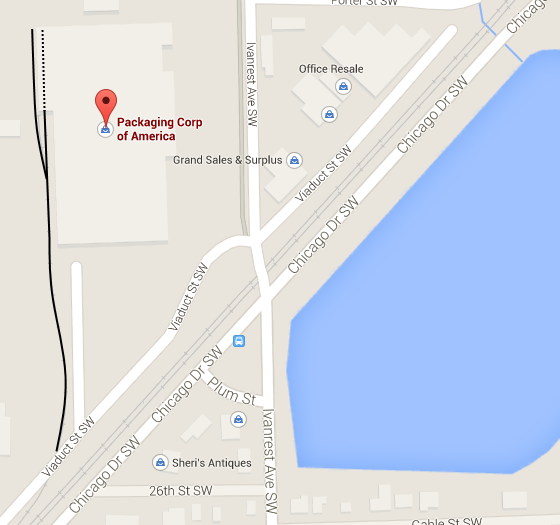
Image 1: The location of the facility from Google Maps
The kicker is that the second of the spurs is used to allow switching to take place on the spur itself. Before you do any more reading watch the video (It is 18 odd minutes long but if you start at about the 4:36 minute mark you’ll get the gist pretty quickly).
Video 1: thanks to Thornapple River Rail Series
Operations
If you start at about the 4:40 mark into the video you’ll see the following occur:
Loco and first three cars cut off from the train
Same pulls forward of the spur switch, and reverses across Viaduct St SW toward the plant
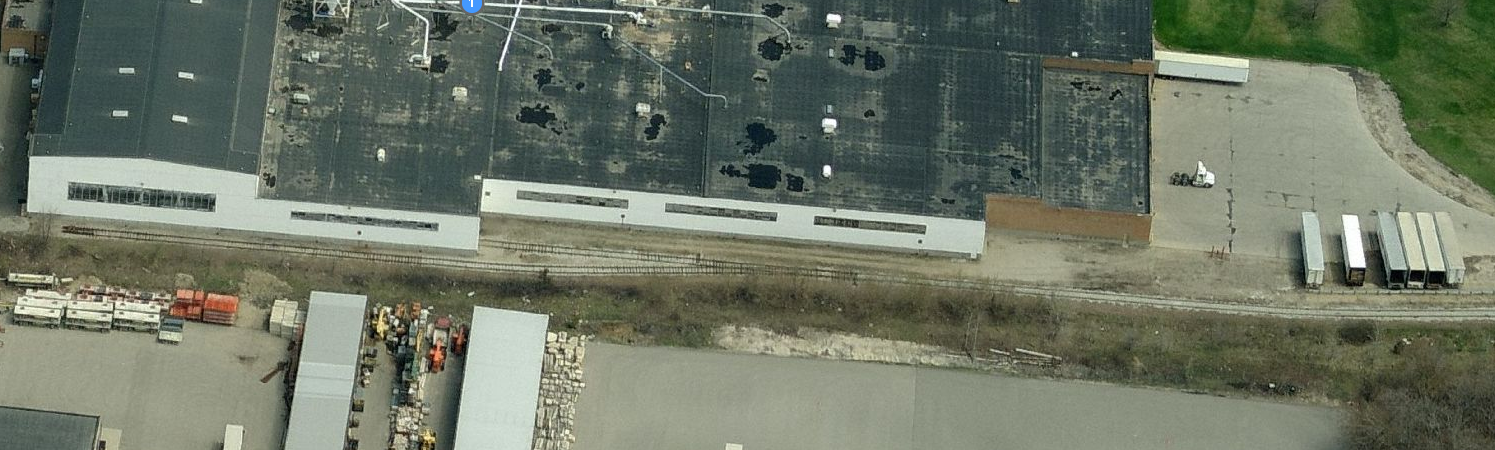
You’ll notice the second spur on the outside of the plant as the train pushes back toward the plant
Once the roller door comes up, the train pushes back into the dock area, picks up the outbound cars, and pulls forward again to clear the switch for the spur
Next, the outbound cars get pushed onto the exterior spur
Inbound cars get pulled forward onto the spur again, the switch is reset, and the inbound cars are pushed back into the dock
Loco cuts off, pulls forward to clear the switch, and once changed over, pushes back to hook on and pump up the air on the 3 outbound cars
Pulling forward the loco and three outbound cars cross over the road and re-join the train
Just to add the cherry on top, the train then reverses back to the yard with the engineer riding the caboose
Now all of this takes between 10 – 14 minutes of video time. But what a fantastic way to spend your 5-20-5 minutes of daily modelling / operating time (read a post on that concept here).
If you want to make it last a little longer, first re-arrange the incoming cars into the order as required by the plant. Additionally some cars may not be unloaded yet, and they need to be moved off-spot, and then back on again with new inbound cars. Some cars may need to be left off-spot on the exterior spur for the next switching session.
Layout idea
While I mainly model in HO my true passion is 0 scale (and bigger when I can manage it). Alas I have not the room for a big layout to run those sized trains – yet.
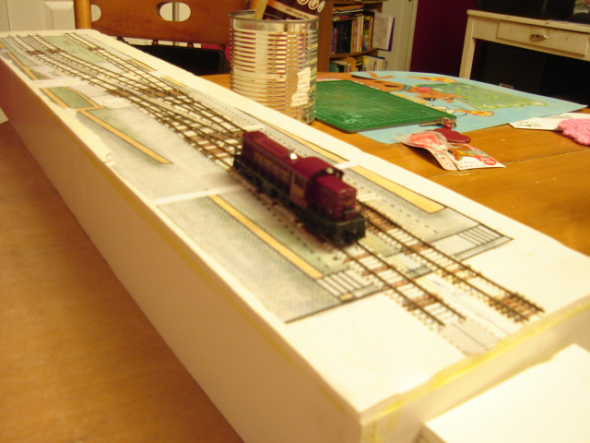
Image 2: The complete layout (click for a larger version of the file)
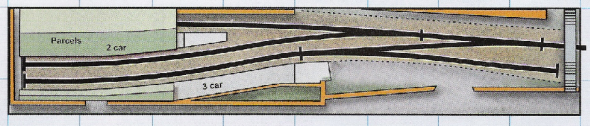
For an 0 scale layout I cannot think of a better idea. You could easily do that in 12 feet and no more than 12 inches wide. If you really had the room you could do it in 18 inches wide and go nuts with weathering, winter trees as in the video, and the knocked over Armco barriers. Glorious! The big gotcha here is that the switching lead ahead of the switch has to be longer than 2x the maximum number of cars you switch into the dock. Don’t forget to add a loco length on top of that too.
So if you switch in 3 cars and out 3 cars you’ll need to have six spots plus a loco length to allow the switching to take place.
Hope that this gets your creative juices flowing. And thanks to Thornapple River Rail Series for posting the video. I am going to be looking through a bunch of his videos now for other similar ideas for my layouts in the future.
It’s a sunny and pleasant Saturday afternoon in Ballarat, hope you’re enjoying your day where you are.
Hard to believe that we are at the end of January already; 1/12th of the year has already sped by.
While tooling around the web I found the following sites of great interest, and hope that you will find them useful and informative too:
Brian Fayle’s website (http://www.brifayle.ca/2abaseshadows.html) – I’ve followed Brian’s website since late 2003. I especially enjoyed his unique approach to figure painting. He starts from black and builds colour up layer upon layer, ensuring that shadows are a part of the painting process. Follow the link and enjoy a really good read. While you are there, take a look around at his range of layouts built over the years.
A new layout found on BigBlue Train forums: Bushwick Terminal (http://bigbluetrains.com/forum/viewtopic.php?f=46&t=6560). Some really great ideas on layout design and the layout itself is going to be really good to watch come to life.


 Andrew's Trains