Category Archives: Scales

All scale information

Site Update – RailBox XAF10 Modelling pages updated

The modelling article on the RailBox XAF10 class cars have been updated. There is new content and the third step of the rebuild article promised some time ago. There’s more information below.


What’s happened

My last update on this project covered the addition of a short history of the class. This time we’re getting into the meat of the project.

This new page covers the dangly bits between the frame and the rails – brake rigging. This is a task focused modelling article on how to simulate the brake rigging on the model without going over the top. Thanks go out to Tony Thompson whose original post on his blog got me started on this particularly enjoyable journey. (There’s a link from the new page to Tony’s original blog post.)

Throughout the series I’ll be aiming to complete the entire project section within an hour (between getting home and dinner for example) and at the end of it have a model that you can be proud of. Here’s what I mean using before and after photos:
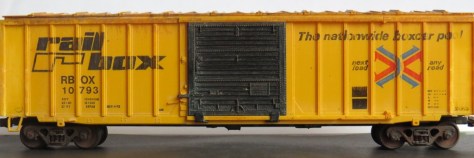
Image 1: The basic Athearn BB kit sans brake rigging
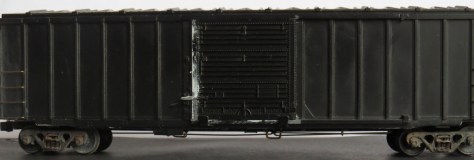
Image 2: Same kit (undec) with brake rigging – a subtle difference but well worth the effort

You can head direct to the page by clicking this link, or head over to the project home page clicking this link. I hope that you enjoy this new part of the project. Like, subscribe and follow to keep up to date with all the new content here on Andrew’s Trains.
Sebastopol Shops – Adding brake gear

There was movement at the station, (to partially quote A. B. ‘Banjo’ Patterson), and I’m working to update a fair proportion of the model fleet with basic brake gear. More below…


Low hanging fruit

I mentioned a couple of posts ago I wrote about simplifying my modelling, without compromising my vision of what I want to achieve with my modelling. I believe that by simplifying my modelling style that should not mean accepting less. I tend to overthink everything, over detail (hyper detail) and in the end never finish anything to the standard I want to – think contest models of everything. But no more however. In that spirit I’ve been working toward cost-effective updates to my Athearn BB and other boxcars that I’ve collected over the years. To that end last week I found (for the second time at least) the post by Tony Thompson on his blog about providing partial yet effective brake rigging. This week I’ve gotten that done on several cars, and what a difference I feel it makes.

There’ll be a full article coming later this week on how I achieved my version over on the project page for the RailBox XAF10 cars. The page updates appearing there will be out-of-order but I’ll be filling in the blanks over the next couple of weeks as I get images completed. In addition there’ve been some cars in for repairs and one specifically coming closer to completion. More on these last two tomorrow.


Images from the RIP track

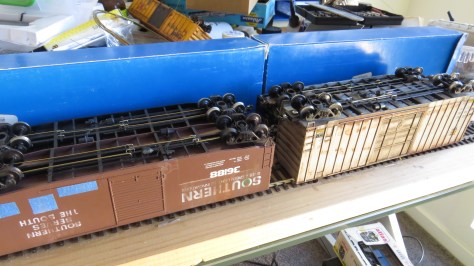
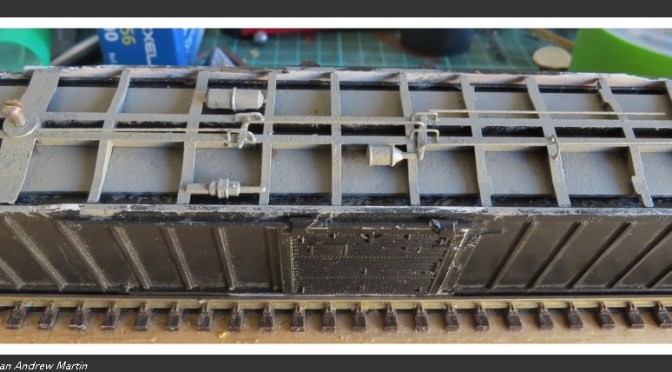
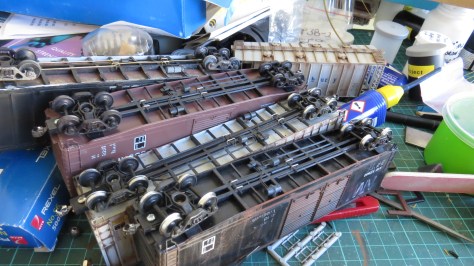
The production line; and while the cars have good general representations of the AB brake system, you can make a better looking version with a little time, staples, some fine brass rod and a little super glue (in this case super thick).

Above: the prototype for all the brake gear, RBOX XAF10 (the car at the back with all brass) with the other three cars using staples for the protective hangers.

Below: Bringing it all together. Staples and brass rod for the actuating rods. Absolutely prototypical? Nope, but they look the goods and make a total difference to the side on view of the cars. Well worth the time and effort to do.

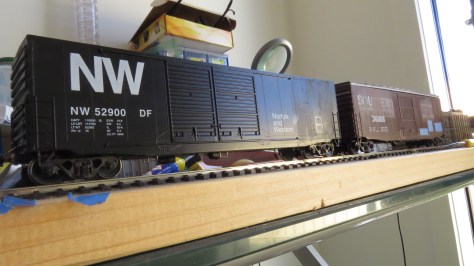
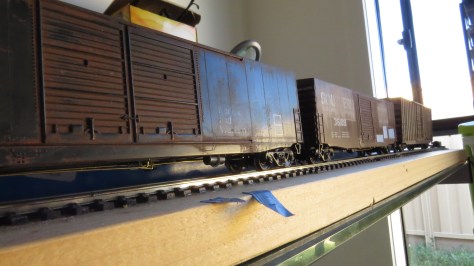
50 Boxcars NW 52900 & Southern 36188 showing the difference between steps:

Above: the car with the beginnings of the brake rigging in place.

Below: shows the difference between one day and the next. Talk about a difference. I really like the look, busy, but simple and cheap to do.

I’ll post more images next time as I work through the rest of the cars on the RIP track.

Thanks for reading and dropping by.

Site Seeing – the “I love the Yard” edition

Imagine an industrial 7mm narrow and standard gauge model railway with radio controlled crane and lorries. Then look at a great video and see it in action.


The Yard

Built by a group of four during a three-month period for a club exhibition. This layout is in 7mm scale and uses both 16.5mm (3.5mm HO standard gauge) and 32mm (7mm O scale gauge) track. Scenic area is only 2’2” x 6’, with an overall size of 2’2” x 9’ including fiddle yard.

Of particular note are the working features of the layout including:

  • standard and narrow gauge trains
  • working gantry crane, and
  • radio controlled lorries

The gantry crane had apparently been on another layout and manually controlled. When moved to the yard it was converted to radio control. The lorries, which I believe are the work of Mr Giles Favell, (see the resources section below for more) were in use on other layouts. The rolling stock came from other layouts also.

Control of trains is by DCC, while point control uses MERG canbus.


Resources

See more about the wonders of Giles Favell’s radio control 7mm scale lorries and his layouts at:

Site Seeing – The David Barrow fan boy edition – September 24, 2018

We moved back to Australia in 2006. So, I have to live through others when they visit David Barrow in Austin Texas, my wife’s hometown, and where we spent 10 years from 1997. Trevor Marshall visited recently and came away with a great post on the man and his layouts – including his new small (comparatively speaking) O scale layout which really piqued my interest.


David Barrow’s layouts

Hi – my name is Andrew – and I’m a David Barrow fan boy tragic…

I first remember reading about David Barrow’s Cat Mountain and Santa Fé layout in the 1980s in Model Railroader magazine. As a young man, dreaming about my large future model railway plans, David’s layouts (there were at my last count about 17 versions of the Cat Mountain) were my ideal. While I dream of those massive layouts still I took another path to small layout designs.

Recently David Barrow has followed down that rabbit hole, this time in O scale, with a new layout. You can read more about that in the second link below by Trevor Marshall.

David’s layout design and presentation skills are unique in the hobby. Not to everyone’s taste I’ll grant, yet having seen and operated on the layout once in 2005, I did not notice its minimal scenic treatment. I was too interested in the operational side of things.

Image 1: Davids Barrow’s entire O Scale layout – battery-powered and operated by radio

Once again the layout design is the centre of attention and the scenic treatment is classic David Barrow – minimalist. However, you can use the design and then scenic it to your heart’s content. Hmmm – now let me see – I have 3 boards in the garage on which that layout design would fit perfectly…

You can out more on this layout in the Model Railroad Planning 2018 publication from Kalmbach.


Resources

Site seeing – the Second Hand Inglenook edition – September 20, 2018

I admire modellers who can get to the meat of a project, quickly and with vigour. Gazmanjack (Gary) on RMWeb used second-hand track, wood and other parts from his modelling left-overs to create a stunningly good small layout for operations. Read on for more.


Linden Ford – the second-hand layout

Gazmanjack (his handle on RMWeb) back in 2014 built an outstanding layout from left over bits and pieces, as an adjunct to his current layout, to give himself something to operate on during the other layout’s longer build. I’ve only just found it and wanted to share the forum post with you.

And what a cracker this layout is. I won’t go into too much detail here, as I think the adage of a picture telling a thousand words is true on this occasion. There is plenty of information in the post too on the build including scenery, tree armatures, and so on.

Image 1: Linden Ford – an outstanding small Inglenook layout

I hope that you find inspiration in the post. So much with so little that turned out so well. Well done Gary!


Resources

Site Seeing – The Super Duper Switch Stand Edition – 9 September 2018


Using Sunset Valley Railroad switch stands on the layout

Operating realism is very important to me. It ensures that those working my layouts move at a realistic pace and in a realistic way. Switch operation is a big part of that goal for me.


The source of inspiration – Port Rowan in 1:64

Originally inspired by a post on Trevor Marshall’s Port Rowan blog, I want to include these switch stands as a part of my operating realism approach.

I particularly like the fact that Trevor uses a single style of padlock to lock the switches along with a length of chain. This ensures that all switches must be unlocked before use, and relocked after use as happens on the 1:1 railroad.

As Trevor says in the blog post, they are more expensive than other simpler options. However, I think that if you have a small layout, and realistic operation is your thing, then the cost is worth it. And they’ll last forever.

I’ve wanted to share this post for a long time, but only recently found all the links again after long searching. I hope you enjoy reading about this and get inspired.


Resources

Site Update – the I have a bench finally edition

It has been more than 20 years since I last had a dedicated modelling room, and the spaces within which, to continuously model. It is nice to be able to leave out projects that I am working on, and not have to worry about little hands and my wife getting grumpy at me because of the mess I leave about. I’m not complaining mind. Just saying that it is nice to be able to leave out projects that I’m not quite finished with and come back to them hours, days or even weeks later without the guilt of being in another’s way.

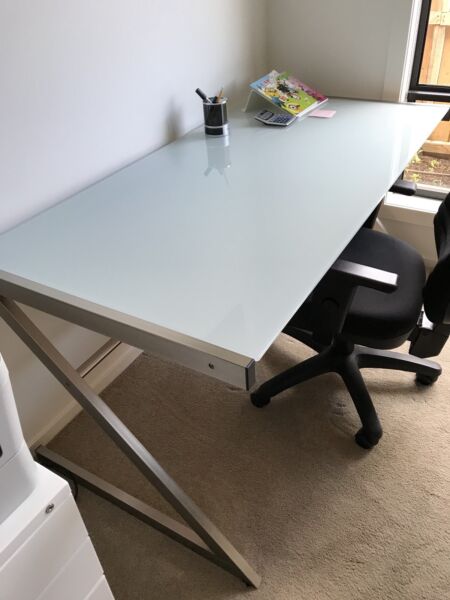
I was lucky in finding a solid glass top desk in a local thrift store (on the cheap mind). Nice thick glass (perfectly flat and great to use when scratchbuilding) with plenty of space to build and keep the projects on (see the image on the left).

And there are several projects that I need to advance and get to completion. Among them are the following Australian outline kit building projects:

  1. GY Grain wagons from the SEM kit as outlined here in 2015

I’ve actually got about 12 of these to complete, and I’ve learned along the way with the kits that while it would be nice to include everything I originally planned, unless you build them from scratch you have to compromise. These will eventually belong to an Aussie outline small layout for exhibition. More on that later – as I need to buy some motive power (A Y class loco, or two, or three, and a T Class too if I can get my bookkeeper to authorise the purchase).

Then there are the following US outline projects:

  1. O Scale GP38-2 rebuilds (more on that here)
  2. HO Scale SW1500 rebuilds (more to come on that in another post soon)
  3. Completion of a bunch of HO scale car repaints, upgrades and so on

There are several other types of non-rail modelling projects that I’d like to finish too, including Robby the Robot, a series of BSG (Battlestar Galactica) projects, a couple of Star Trek projects and tanks, submarines, and a couple of dioramas for these said projects too.

That’s it for now on this update. There’ll be more information and write-ups coming on these projects as I get them moving again. I still have some parts to order for the O scale project, where as I’ve all the parts needed now for the SW1500s.

Site seeing – Saturday morning video watching edition

It’s been a while since I’ve had the time to post. A range of reasons you’re all familiar with – work, tiredness, time pressure and the needs for others among them. And then that this is at the moment a hobby and not my primary income source (sigh).

While taking a little time out for myself in the early morning (before the sun came up on a very chilly day in Ballarat) I rediscovered the video produced by the folks over at Model Railroader on model railroad operations. Hosted by the late (and greatly lamented Andy Sperandeo) this video is a great introduction to operations, without all the paperwork, and other stuff that can hamper your entry into the realm.

I hope you enjoy, and it is great to share with you Andy’s wit and personality. I miss being able to chat with him as I did every now and then online about operations and the finer points he knew from a lifetime of modelling. Have a great weekend.

Site seeing – the oil soaked track edition – April 15

Mike Cougill over at OST Publications is an inspiration when it comes to modelling track. His work is in O scale sure, his techniques however can be used in any scale to spruce up, or in this case make a mess of, otherwise perfectly good track.

His recent post about modelling oil soaked track is a point in case. Simple, presented in a straightforward style and always willing to experiment Mike’s technique provides a great result.

Image courtesy of Mike Cougill

Mike’s site is full of great articles and ideas. Very well worth the time taken to visit.

Site Seeing – January 1 – The new Everard Junction version

Everard Junction was a great finished model railway filling the loft of Richard Warren’s home in the UK (his YouTube channel can be watched here). However, he was unhappy with several key elements to the underlying baseboard design and issues with the loft space itself  that were causing running issues due to temperature and moisture. So he took what I consider to be a brave step and decided to start again from scratch.

With the loft area now completely reworked, insulated and ready to go, the work to build the new Everard Junction (Mark II?) is underway. As I write there are four videos in the current build series with more to come. With much detail each shows what ideas and issues Richard is solving as he builds the new layout. Richard’s baseboard design shows the very serious thought he has put into the new build. A couple of his ideas will make it into my next baseboard design, specifically allowing a removable backscene within the body of the baseboard.

Click the videos below to being watching, and if you find them interesting head over to the YouTube channel and like and subscribe. There’ll be more content about the build shortly and Richard is very good at presenting his ideas and showing his working method. Now onto the videos.

Videos

New Layout Build – Baseboards

Layout Update – November 2017

New Layout Build – Backscenes

New Layout Build – Fiddle Yard

There are a heap of videos on his channel that should be watched for their ideas and his modelling is outstanding. Enjoy Richard’s work; I do.