Category Archives: Inglenook

Site seeing – September 09 (the follow-on Inglenook folio edition)

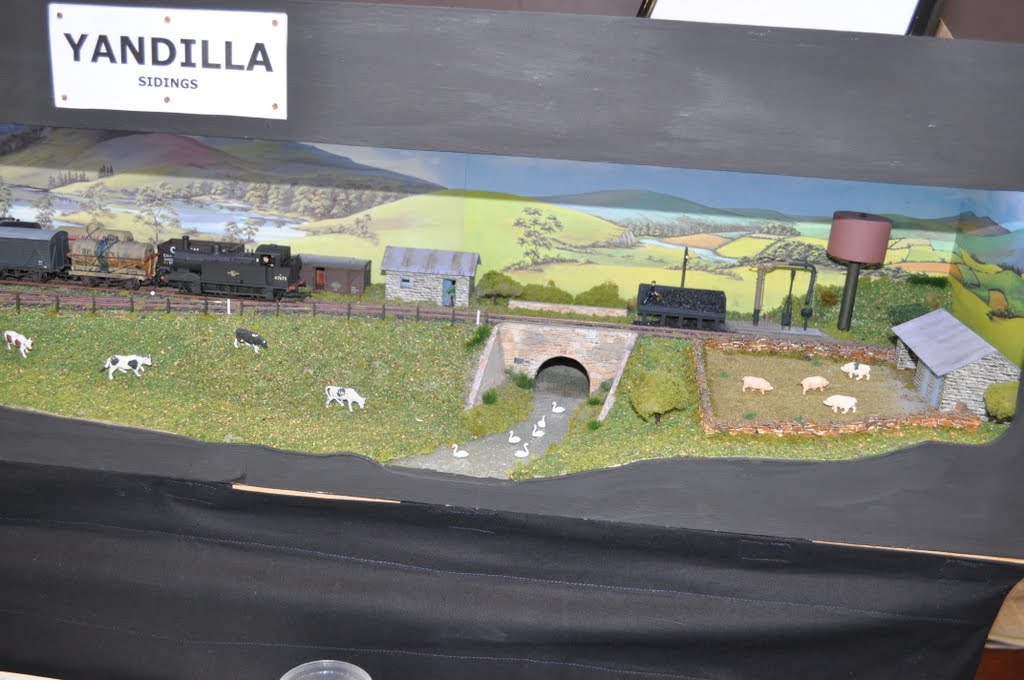
Yesterday we looked at Yandilla Sidings, an excellently presented Australian Inglenook exhibition layout (read more about that post here). Today we have another Inglenook that jumped out at me on the Micro/Small Model RR Layouts group on Facebook.

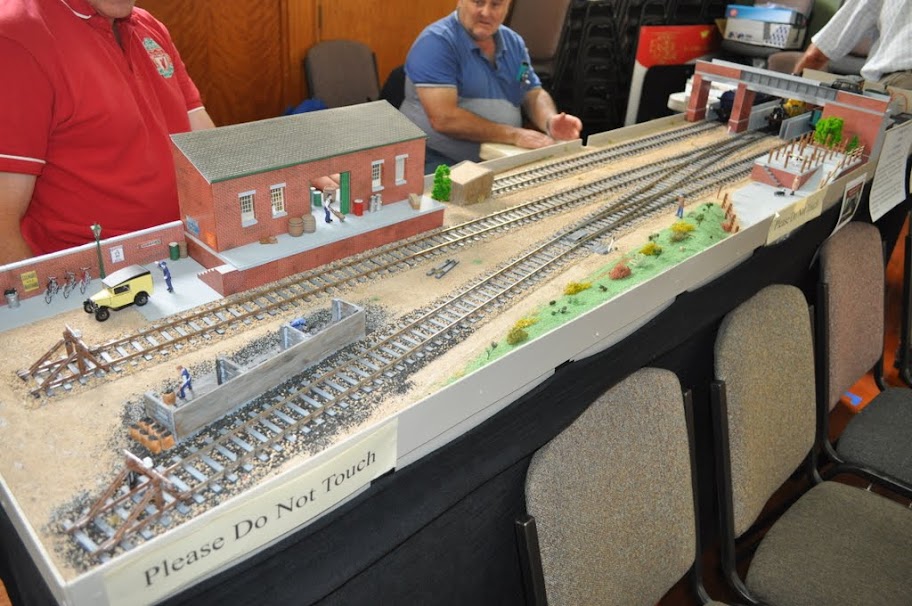
Site 1: Ben Gray’s “Rozelle Street” layout

First we need a little context before we get to the layout’s brilliance. As a Western Sydney boy, I regularly saw long and short freights during the 1970s come through Blacktown in Sydney’s west before and after school. Living in Marayong on the Richmond branchline we had regular freights to and from the Riverstone Meatworks, and further up the line to Richmond itself.

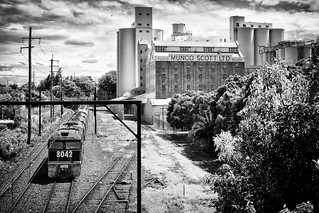
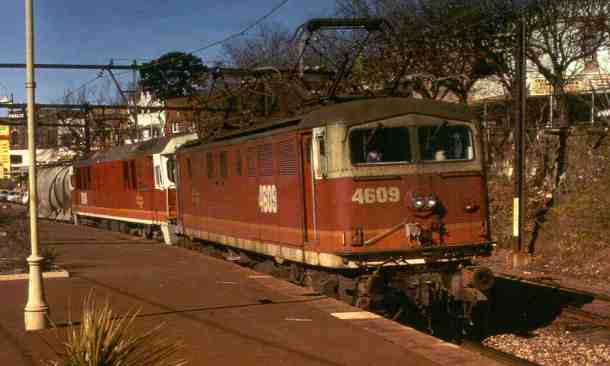
In the inner west (when I could wrangle a train trip into the city) I saw several locations that I always thought I’d like to model. The Mungo Scott flour mill siding for one as shown below seemed ideal. It was inner-city, working class, railway grit that has had me fascinated all my life. Here’s two examples from that location.
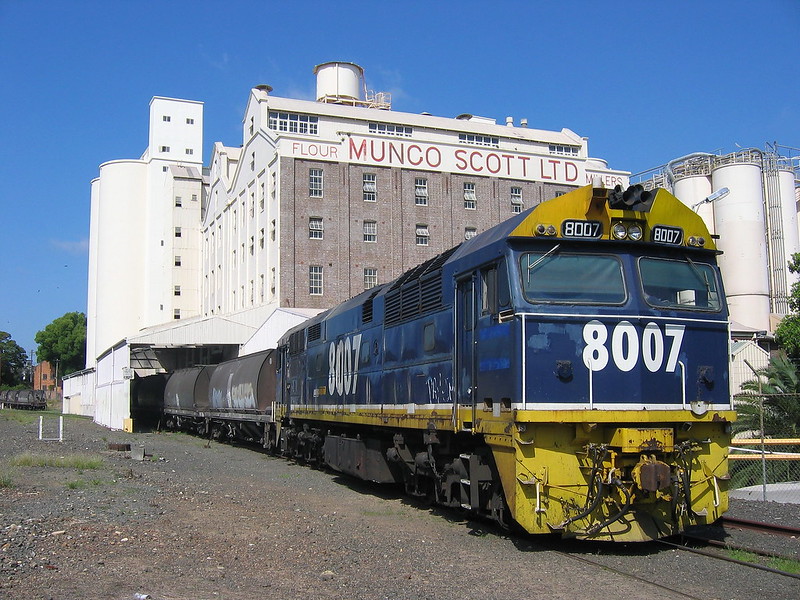
Image courtesy of Rob Cook

8042 at Mungo Scott

Image courtesy of Trent Nicholson

So now that you have a visual context of the type of layout that I’d always wanted to build let’s take a look at Ben Gray’s vision of inner city railway industry in a small space (not that you’d notice).

Image courtesy of Ben Gray

The image above caught my eye immediately. First, I loved seeing these 46 class electric locos working freight and passenger traffic around the Sydney network. Designed for heavy freight drag work out of the Sydney basin and over the ranges to our west, these locomotives were built by Metropolitan-Vickers and its partner Beyer, Peacock and Company in England for the New South Wales Government Railways. For many years these were the most powerful locomotives in Australia with a one-hour rating of 3,780 horsepower (2,820 kW) and the ability to deliver more over short periods. They are to me the most beautiful locomotives (electric or diesel) built and look fantastic on this Inglenook (if only there were overhead wire – sigh).

There are some very clever uses of visual trickery here. The layout is just an Inglenook but it is so much more because the focus is not on the Inglenook; rather the focus is on the concept of the viewer’s experience of the layout. You have to be an inner city kid, who saw locomotives similar in appearance, doing what locomotives do with freight cars. And how it worked on me. Good one Ben and well done on taking me back 30 years with one photo.

Enjoy another view of the layout. Follow the links above and if you’re a Facebook user head on over to the group and join in the small layout love. Finally see if you can work out some of the clever tricks used in the design of the layout.

Now for a little more 46 class locomotive weathering porn (model first, prototype last):
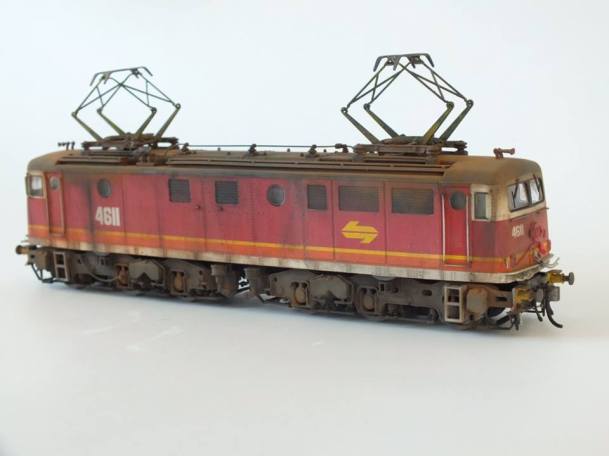
Image courtesy of Dean Bradley

And

Image courtesy of http://nswrailrambler.blogspot.com.au/

The lovely old 46’s were notorious for getting and staying grubby, but really what’s not to like eh? All the best see you over the weekend.
Site seeing September 8 (Inglenook folio edition)

The reason the Inglenook is such a popular subject for small layouts is simple: it works on many levels to enable operations. Today let’s look at one recently found Australian design.

Site 1: Yandilla Sidings

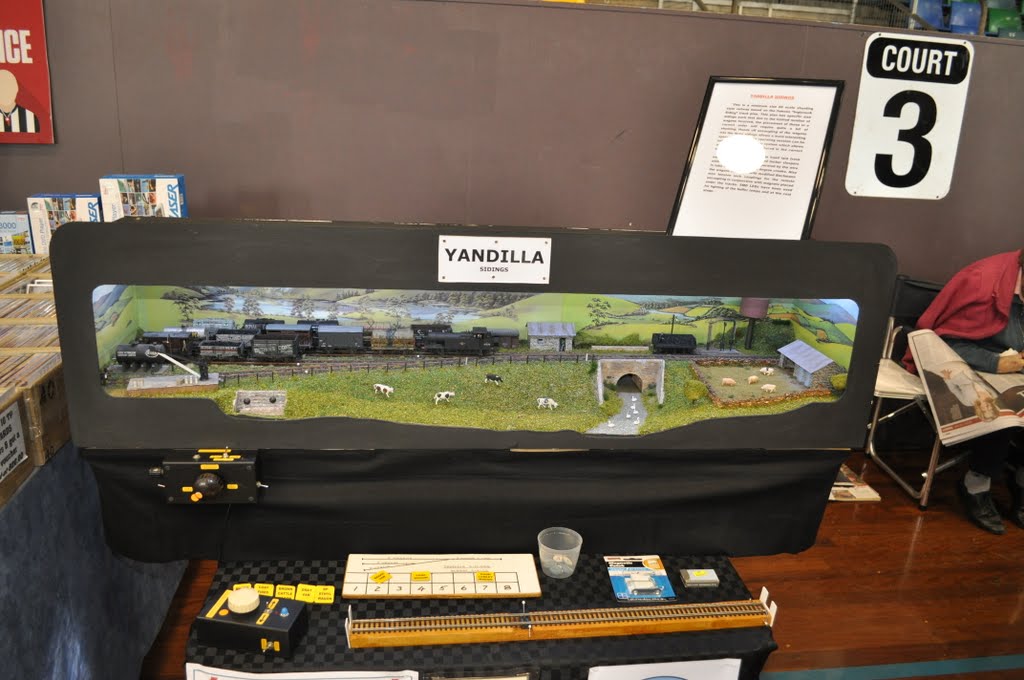
Captured and photographed by David Bromage at the Gold Coast Model Train Show in or around June 2016 at the Carrara Indoor Sports Stadium this layout shows what can be achieved in a small space with great presentation and attention to detail.

Image courtesy of David Bromage

In this overall image  you see the entirety of the layout. What it shows to me is that you can have a small layout (in this case with UK prototype trains) that keeps the interest of the viewer and the operator, allows interactivity between the viewer and the operator (and should you choose to do so) allow the viewer to become the operator.

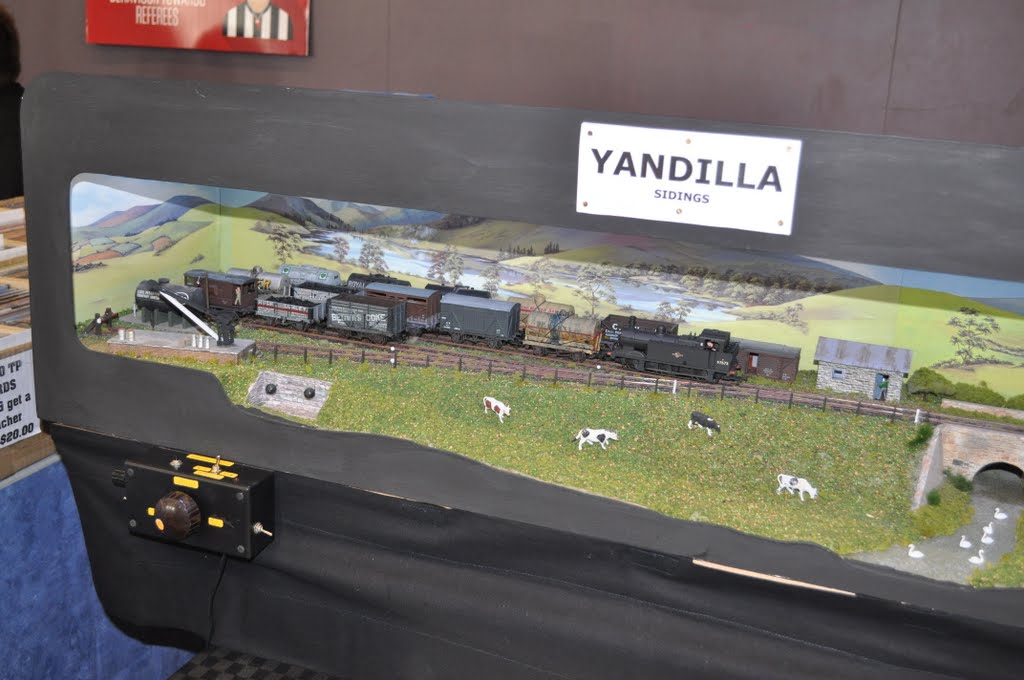
Image courtesy of David Bromage

In addition you can build the layout board and case quickly, with little effort if using pre-built (Ikea style) components. Then you can go to town on the detail in the viewable scene. If you want more than you can add more into the scene, or as the operator has, show the operating scheme to the public at large.

Image courtesy of David Bromage

Using the link in the heading above will take you David’s portfolio for the exhibition. I hope that you enjoy looking into this scene and learning as much as I have from it. I’d like to build an Inglenook in HO for exhibition use this southern spring and summer. I have several layout ideas for an inglenook and a Supernook – who knows what we’ll end up with!

Site seeing: August 31 – Winter is going (at least down here)

Winter is over, although where we live in Ballarat at 420m (1370 feet) above sea level, you’d be hard pressed to tell that change of season has arrived. Our mornings are still cold, the winds are still lazy (they go through and not around you), and the weather is not shiny or happy. However, my seasonal allergies have kicked in, and the Wattle has been in full bloom for about 3 weeks now. I’m sniffling, my eyes are streaming and I look like I’ve gone five rounds with the late, great Muhammad Ali. My allergies and the weather are not the reason for today’s end of Winter post…

Site 1: Croft on the ScaleFour society’s website

Built as a shunting puzzle (Inglenook) and based loosely upon the real Croft goods (Darlington, NER, not Leicestershire LNWR), Croft is a magnificent example of simple effective display and operation. The image below courtesy of RMWeb and Steve Taylor.

I could go on at length about this layout, or I can let you soak up the atmosphere of this image and then follow the ScaleFour link above.

Site 2: RMWeb’s Croft Gallery

Go, look, mind blown.

Hope that this gets your creative juices flowing. Looking forward to the Southern Spring.

Site seeing – May 11 (the Shelf layout Inglenook post)

It’s been some time since my last post, due mainly to work and other real world commitments. Recently while enjoying a little downtime, I cam across a great set of posts and the layout blog. I wanted to share that with you.

Site 1: Burbank Branch Layout

A simple Inglenook track plan, this layout has some outstanding features that make it worth looking into. Not least is the modelling skill shown going into the layout by the builder – survivaljoe over on the MRH website..

Burbank Branch Layout plan

As a renter he needed to build a layout that could move when he moved and not mount to or damage any of the walls in the dwelling. The control is DC for the moment while he waits for new technology in the market to mature. That does not appear to change the slow running qualities of locomotives.

Designed for operating sessions of roughly 30 minutes at a time (which I’ve talked about several times before as the perfect amount of time to operate on a small layout) this layout really shines up well, even without all the scenery in place.

The video above shows a basic operating session and the modelling quality involved.

While the video above shows images taken during the build process. I hope that you enjoy look at the layout as much as I have. Look into the resources below for the build and blog over the MRH site also.

Resources:

Site Seeing – April 9 – Small O scale layouts 5

While tooling around the Broadford MRC’s site looking for information on Glen Bogle mentioned earlier this month I found our next contestant for a small O scale layout well within the reach of anyone interested in the larger scale.

Site 1: Chard Creamery O gauge  8′ by 2′ (Richard and Sue Andrews)

Chard Creamery layout (8′ x 2′) – Richard and Sue Andrews

When it came time to build a new layout Richard Andrew’s thoughts turned to his boyhood memories of the S&D Railway to Basinbridge Milk Factory. Andrew says that “as I love small shunting layouts I decided to see if I could build a O Gauge layout representing a milk factory with either a river or as it turns out a canal running beside it in a 4′ x 22″ wide baseboard”.

With mock ups made Andrew decided he could put three tracks on the board without turnouts to give a loading/unloading bay for the milk, a centre road for coal and other goods, and a front siding which went to another loading/unloading bay for dry goods, butter, cheese, etc. He stresses that the layout is not a copy of Basinbridge, and chose to make the buildings of similar but freelance design.

Chard Creamery – O Gauge in a small space

The name Chard came about because of the canal that used to run from Taunton to Chard. While that canal is now long gone and Andrew had a Skytrex Barge built and painted in need of a home this seemed the ideal situation.

Skytrex Building Flats fill in the background while all main buildings are scratchbuilt out of card with a Slater’s brick overlay. The pub scene replaced a former building now relegated to the background and helps to block the view of the fiddle yard.


Site Seeing – April 5 – Small O scale layouts 3

With many thanks to David Bromage for sharing photos of his visit to the 2016 Bendigo Model Railway exhibition let’s take a look at a new O scale layout on the Australian exhibition circuit: Filching Road Yard.

Site 1: Filching Road Yard (courtesy of David Bromage)

Photo courtesy of David Bromage

New on the Victoria model railway scene is Filching Road Yard. A simple and not overly large O scale of 8 feet (2400mm) by 18″(450mm) wide. The layout is a budget build and was designed to fit into the back of the owner’s car (a station wagon).

With only two turnouts and a cassette fiddle yard this could be the ideal O scale starter layout. To keep your costs down you could also build your own trackwork, a project that I’ll be undertaking later this year as I attempt to increase my modelling skills into trackwork.

Like this post and comment if you find it useful or would like further information; if you’ve not already subscribed to keep up to date you can do so now using the link at the top of the post.

Site Seeing – April 3 – Small O scale layouts 2

In this continuing series during April I want to visit one of my favourite exhibition switching layouts: Ingleton Sidings.

Site 1: Ingleton Sidings

nevard_110330_ingleton-sdgs_DSC_1821_02_web1-400x267[1]Paul Allen’s masterpiece Inglenook, built in OO scale,  shows what can be scaled up very simply to British O scale (1:43) with the use of commercially available kits, RTR trucks and loco’s available now or in the very near future. The entire aim is to keep cars and loco’s short to keep the visible part of the layout within the 8′ (2400mm) maximum. Giving enough run and movement without taking up the entire house.

Ingleton Sidings, designed to sit on a standard home window sill or ironing board, illustrates what can be achieved in a minimum with RTR products and basic scratchbuilding techniques. The location as modelled is fictional and represents a small BR sorting siding during the late 1950s through to the early 1960s. The layout features point motors, 16v lighting, line side CCTV and Kadee automatic coupling. With the layout detailed and weathered to represent the last days of steam.

If you are thinking of going British O at minimum cost and personal commitment then Ingleton Sidings might be the place where you start.

Now see it in action:

First up an overview of the layout and features:

Next, from February 2014 – the initial running of DCC and Sound on the layout at the Milton Keynes model railway exhibition:

Site seeing – March 29 (Trackmobile layout edition)

The BLI HO Scale Trackmobile
The BLI HO Scale Trackmobile (image courtesy of BLI)

One of the better small locos to have come out in the last 10 years is the HO scale Trackmobile available from Broadway Limited Imports. I’m working on my unit to weather it into a loved if hard worked unit. There’ll be an article in April about how I weathered it and how you can do so too. The only drawback with this model is the dummy coupler on the front end. Somewhere on the internet I read about a change to the Trackmobile front where you add a shortened Kadee #58 coupler directly under the dummy coupler. Essentially the change was drilling and tapping a 2-56 hole in the bottom centre of the dummy coupler, shortening a #58 coupler and then drilling a hole in that for the 2-56 screw before screwing the two of them together. While not perfect it falls within the Kadee coupler height gauge requirements and allows the Trackmobile to be double ended. Saving the Hand from the sky (the 0-5-0 hand of god) traverser. Now, onto today’s site.

Site 1: RÜGENSHAVEN (Carendt.com)

Thomas Van Hare's Rugenshaven Layout
Thomas Van Hare’s Rugenshaven Layout

Thomas Van Hare of Ashburn, Virginia, USA put this layout in the Carendt.com First layout design contest in May 2008. While the layout location is imaginary this HO Scale German fishing harbor corner layout Thomas says “involves a Timesaver (with eleven destinations), plus dual opposing Inglenooks, competitively running two DCC ‘Little Cow’ Trackmobiles”.

The layout features small fishing warehouses, boat maintenance facilities, fueling and supply shops, a fishing net manufacturer and marine diesel repair shop. At center is the harbor’s main canning smokehouse business, with two loading platforms.

You can find out more about the layout design challenge and the entries from the 2008 challenge on the Carendt.com site.


Site seeing 28 September – the Sprung has springed edition!

It is spring in the southern half of the world, and as a result everyone is coming down with seasonal allergies after a very long (well it seemed that way), cold (no it really was as cold as charity according to the weather bureau) and miserable winter.

Today is also marks my brother’s birthday – so Happy Birthday Scott. Hope that you get the message. More importantly I hope that you are reading the blog! But enough of me and onto the site seeing!

Site 1: One turnout layout variation

I’ve mentioned Chris Mears’ site in the past. His current post provides some interesting thoughts on variations among other thoughts on the “One turnout layout” posited by Lance Mindheim in the May 2013 edition of the Model Railroad Hobbyist Magazine.

Read the article, and then read, and take part if you’re willing, in the discussion at the end of the post. It’s been thoughtful reading. Not saying that I agree with it all, but it has been thought provoking.

Site seeing – August 10th

Yesterday was all about passenger service; today is all about freight. Chris Gilbert pointed this video out, on his YouTube page. However the producer is ChicagoJoe28. But enough words let’s get to the video.

Site 1: Mike switches Batory Foods Chicago Terminal railroad

Video 1: Batory Food Switching on the Chicago Terminal

A little history

Located at 2234 W 43rd St, Chicago, IL 60609, Batory Foods began trading in 1979 when Abel Friedman opened Chicago Sweeteners. As a single source supplier of basic food ingredients such as sugar, flour, salt, starch, milk, oats, honey and corn syrup. Chicago Sweeteners expanded its product offering over time, as food manufacturers sought to develop healthier products.

With success in the greater Chicago market, the Company brought its broad line model to food manufacturing centres around the country. Some of the growth came with the original business; some by way of acquisition with:

  • Sugar Incentives bought in 1995,
  • Ingredients International in 2006,
  • Quality Ingredients in 2008,
  • LSI in 2009,
  • Industrial Ingredients in 2009,
  • Massey Fair in 2011, and
  • Mac Source in 2011.

Recently, the various names were consolidates into the single name: Batory Foods.

The layout idea

The site’s switched as an Inglenook. The two on-site spurs lead to undercover augers (I’m assuming here of course) for unloading powdered or granulated product.

Batory Foods Chicago - An Inglenook you can model

Image 1: The unloading spots (courtesy of Bing)

The storage track goes to other industries further down the track, but does not show recent use from my quick look. The loco has to push the cars into the site so you have a simple, prototypical Inglenook that won’t take up too much space. It is small enough that you could model any date from 1979 on in HO, S or O scale.

SCORE! What are your thoughts?

Thanks to Chris Gilbert for the vision, and to ChicagoJoe28 for filming it.