It’s been some time since my last post, due mainly to work and other real world commitments. Recently while enjoying a little downtime, I cam across a great set of posts and the layout blog. I wanted to share that with you.
Site 1: Burbank Branch Layout
A simple Inglenook track plan, this layout has some outstanding features that make it worth looking into. Not least is the modelling skill shown going into the layout by the builder – survivaljoe over on the MRH website..
Burbank Branch Layout plan
As a renter he needed to build a layout that could move when he moved and not mount to or damage any of the walls in the dwelling. The control is DC for the moment while he waits for new technology in the market to mature. That does not appear to change the slow running qualities of locomotives.
Designed for operating sessions of roughly 30 minutes at a time (which I’ve talked about several times before as the perfect amount of time to operate on a small layout) this layout really shines up well, even without all the scenery in place.
The video above shows a basic operating session and the modelling quality involved.
While the video above shows images taken during the build process. I hope that you enjoy look at the layout as much as I have. Look into the resources below for the build and blog over the MRH site also.
I know that I said that this month was all about O scale layouts that fit within the 8′ x 2′ display footprint. With the addition of a fiddle yard or other means to stage trains I feel that today’s idea should work quite well for those interested in a slightly larger area US style switching layout.
Originally Nick Palette was intending to build an O scale version of Shortliner Jack’s Box Street yard. Plan below:
After some thought and playing around Nick instead decided to use another plan, the Fort Smith Railroad. In mostly the same space. The track plan is below:
Nick who’s username on the RMWeb community is Northpoint, has been building this layout for some time now. While the Fort Smith layout plan is over the size of most of the layouts so far this April, I feel that within the context of the layout styles presented so far and with some reworking of the siding length to shrink the layout we are still within the bounds of the size of layout I envisioned.
Head on over to the RM Web link above to look through the layout build. First thought watch the video of Nick’s first operating session to whet your appetite.
Whether you model the US, UK, Australian, Canadian, South American or European scene one thing that O scale requires is imagination. As much as I would like to have a very large garden and shed layout, the reality is that is not going to happen due to constraints with money and time. I have not enough of either and so the scope of what I model has to be within my reach, simple to achieve and quick to build and ready to a credible level of detail and where possible use what I have to hand. On to today’s site of interest.
Site 1: Pick Purse Halt O scale in 9′ by 2′ by Richard and Sue Andrews
When space is tight using imagination allows you to find and define the layout’s place within the wider railway network; Pick Purse Halt does this admirably. Let’s take a look at the track plan first and see why.
Pick Purse Halt’s track plan
On first look, there’s not much to the track plan. One turnout and a couple of sidings. The layout portrays a small passenger halt along a GWR Country branch. So we’re set in time during the 1930s with steam railmotors and Auto Coaches on passenger work and pannier tanks working the freight trains. Let’s assume though that the line did not close during the 1960s and the Beeching cuts; where would that take us?
Single car DMUs such as RDCs, Gloucester RC&W Class 122 Bubble Cars, Tokyo abounds with types, as does Europe and I think you may now get the idea. All we’ve talked about though is the passenger service on the through line. There is also the short freight passing by and reversing into the sidings. Or coming in direct from stage left; this is where the operational potential of the layout really comes into its own.
The freight area can be worked differently in many ways both visually and conceptually:
As described in the plan for UK mid-1930s
As a factory dock during the 1950s through the 1970s and 1980s
As a simple team track arrangement for literally any time you like
As a small transload point with a Y and a platform for unloading two rail cars by pallet truck and forklift
As a small layout Pick Purse Halt punches way above its weight. So much to be done with the design and the scenic treatment depending on the era and location you model. Your choice could come down to using what you have on hand to set the location.
With controlled lines of sight, and the feeling of the rest of the railway just beyond the board, this could well prove to be the best idea of the month.
Like this post and comment if you find it useful or would like further information; if you’ve not already subscribed to keep up to date you can do so now using the link at the top of the post.
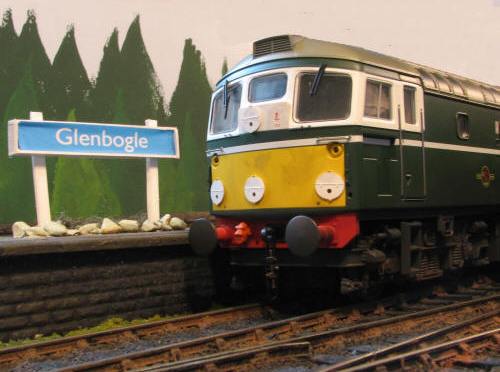
While tooling around the Broadford MRC’s site looking for information on Glen Bogle mentioned earlier this month I found our next contestant for a small O scale layout well within the reach of anyone interested in the larger scale.
Site 1: Chard Creamery O gauge 8′ by 2′ (Richard and Sue Andrews)
Chard Creamery layout (8′ x 2′) – Richard and Sue Andrews
When it came time to build a new layout Richard Andrew’s thoughts turned to his boyhood memories of the S&D Railway to Basinbridge Milk Factory. Andrew says that “as I love small shunting layouts I decided to see if I could build a O Gauge layout representing a milk factory with either a river or as it turns out a canal running beside it in a 4′ x 22″ wide baseboard”.
With mock ups made Andrew decided he could put three tracks on the board without turnouts to give a loading/unloading bay for the milk, a centre road for coal and other goods, and a front siding which went to another loading/unloading bay for dry goods, butter, cheese, etc. He stresses that the layout is not a copy of Basinbridge, and chose to make the buildings of similar but freelance design.
Chard Creamery – O Gauge in a small space
The name Chard came about because of the canal that used to run from Taunton to Chard. While that canal is now long gone and Andrew had a Skytrex Barge built and painted in need of a home this seemed the ideal situation.
Skytrex Building Flats fill in the background while all main buildings are scratchbuilt out of card with a Slater’s brick overlay. The pub scene replaced a former building now relegated to the background and helps to block the view of the fiddle yard.
Ian Futers’ layouts seem to get around more than the builder himself. Probably because he manages to build great small layouts with plenty of operating potential that remain popular year after year.
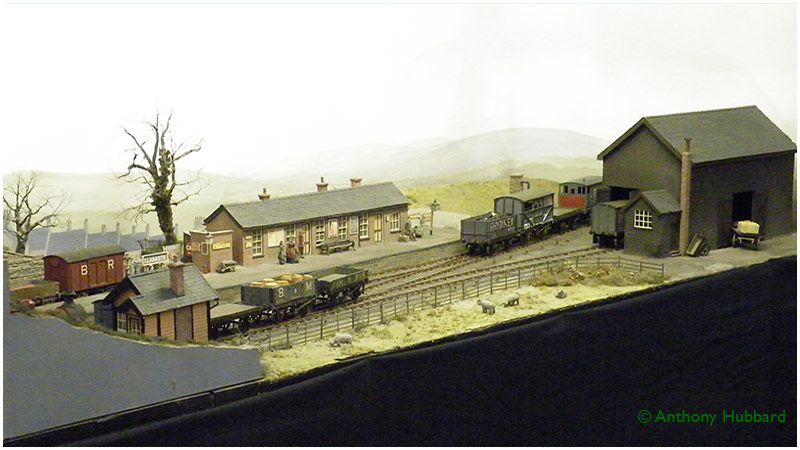
Ian Atkinson and Chris Towers’ of Broadford Model Railway Club own the layout presently. The layout, built originally in basic form by Ian Futers, is in the process of being enhanced by the present owners. A Scottish 1950-1970s era layout with a station, goods facilities and just four turnouts comprises two 4′ 6″ scenic boards and a 4′ 6″ fiddle yard with a three road traverser board.
Operation of the line is in the late steam early diesel period. Coal, Timber and fish traffic somehow still survive along with a mediocre passenger service.
Like this post and comment if you find it useful or would like further information; if you’ve not already subscribed to keep up to date you can do so now using the link at the top of the post.
With many thanks to David Bromage for sharing photos of his visit to the 2016 Bendigo Model Railway exhibition let’s take a look at a new O scale layout on the Australian exhibition circuit: Filching Road Yard.
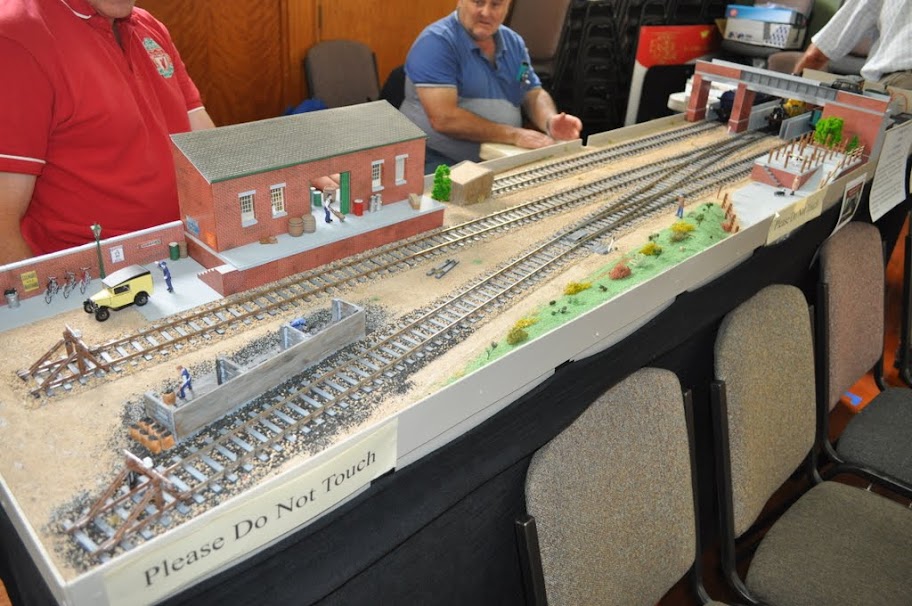
New on the Victoria model railway scene is Filching Road Yard. A simple and not overly large O scale of 8 feet (2400mm) by 18″(450mm) wide. The layout is a budget build and was designed to fit into the back of the owner’s car (a station wagon).
With only two turnouts and a cassette fiddle yard this could be the ideal O scale starter layout. To keep your costs down you could also build your own trackwork, a project that I’ll be undertaking later this year as I attempt to increase my modelling skills into trackwork.
Like this post and comment if you find it useful or would like further information; if you’ve not already subscribed to keep up to date you can do so now using the link at the top of the post.
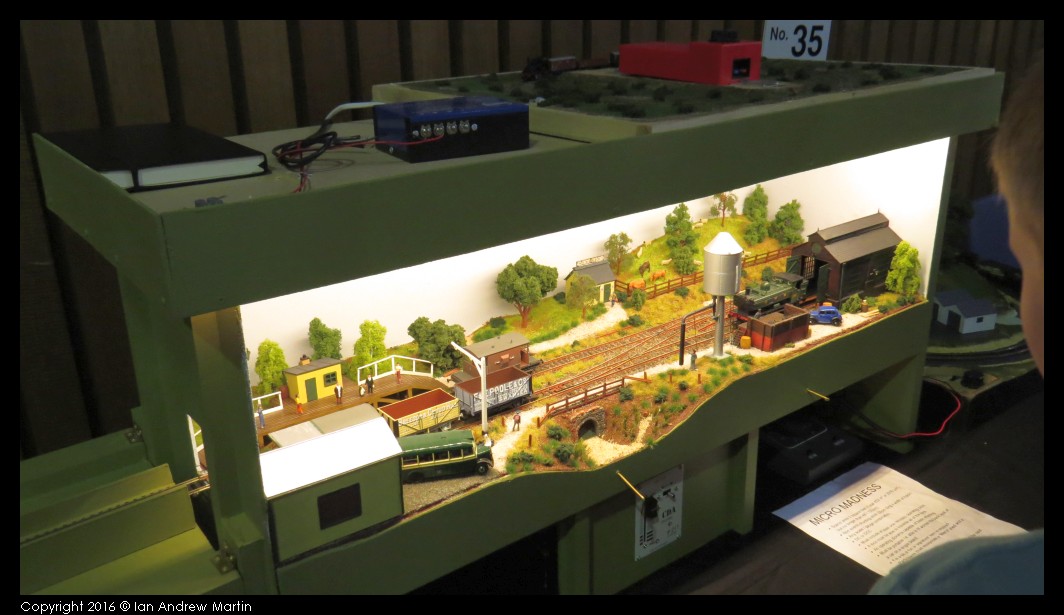
Paul Allen’s masterpiece Inglenook, built in OO scale, shows what can be scaled up very simply to British O scale (1:43) with the use of commercially available kits, RTR trucks and loco’s available now or in the very near future. The entire aim is to keep cars and loco’s short to keep the visible part of the layout within the 8′ (2400mm) maximum. Giving enough run and movement without taking up the entire house.
Ingleton Sidings, designed to sit on a standard home window sill or ironing board, illustrates what can be achieved in a minimum with RTR products and basic scratchbuilding techniques. The location as modelled is fictional and represents a small BR sorting siding during the late 1950s through to the early 1960s. The layout features point motors, 16v lighting, line side CCTV and Kadee automatic coupling. With the layout detailed and weathered to represent the last days of steam.
If you are thinking of going British O at minimum cost and personal commitment then Ingleton Sidings might be the place where you start.
Now see it in action:
First up an overview of the layout and features:
Next, from February 2014 – the initial running of DCC and Sound on the layout at the Milton Keynes model railway exhibition:
April is now and forever more deemed to be the ‘O scale’ small layout month.
Throughout April I’ll be posting layout plans, and information, on small and achievable layouts that have already been built in O scale, or that could be up-sized from the smaller scales to fit in a maximum visible space of 8 feet x 2 feet (2400 x 600 mm).
The only requirement is that it must be based on the recognised scales of:
1:43.5 (UK & Australian Standard gauge)
1:45 (European)
1:48 (US & Australian Broad gauge)
So this includes 0n30, Metre gauge, standard, broad, and anything else that you can imagine. Traction can be steam, diesel and, or electric. If you have an industrial track plan or layout that is small in nature I’d be really interested in seeing more information or links to your website especially.
I’ll still be posting the usual informative and layout focused information as normal, this is simply something special I’ve wanted to do for some time.
If you have any ideas or layouts that you’d like to share during April drop me a line through the comment field and I’ll work with you to get that information into a post!
Don’t forget to ‘Like‘ this post and ‘Comment‘ if you find it useful or would like to offer or need further information. If you’ve not already subscribed to keep up to date you can do so now using the link at the top of this or any post or page.
Layout presentation is something that I care greatly about. Today’s post, from The Small Urban Rails site takes you through a comprehensive review of proscenium arch and other presentation styles useful to model railroaders. Enjoy.
This insightful article about the author’s Southside Industrial District, originally housed in a 28” x 88” closet (thus its dimensions) and his discovery of the beauty of presentation after leaving the closet light on one afternoon before returning later in the evening to a darkened room and the image of the HO scale skyline of the Southside standing out from the room darkness.
Discussing styles of presentation and moving onto how he framed the Southside Industrial District this post is well worth the time to read and understand how your layout can really pop out of the background with simple framing techniques.
Like this post and comment if you find it useful or would like further information; if you’ve not already subscribed to keep up to date you can do so now using the link at the top of the post.
Small layouts really tick the box for me when it comes to model railroading and I’m assuming they tick your box also since you all keep coming back. Recently this English layout was discussed on the Prince Street blog. On to today’s sites.
The idea for the layout was born in the early eighties when the builder moved from All PostsWales and found himself in an apartment too small to accommodate the layout he’d been building based on the Brecon and Merthyr station at Rhymney.
Image 1: The entire layout in all it’s finished glory
To keep his skills up and to run his stock he decided a compact layout should be built that allowed a fast setup and takedown time. Llanastr was the result. The home site has a full history of the layout and the build details.
The image shown above provides a comprehensive overview of the layout. But there’s still more (unfortunately no steak knives). Head on over to the ScaleFour’s site and take a look at the other images of the layout, they are worth the effort after the jump.
Site 3: Llanastr on YouTube
Although short this video provides a full overview of the layout and shows in detail the sheet background (I’ve not seen one better) and the track plan. If you look closely in the left-hand end of the layout you’ll see the operator using the pivot table to move a loco onto another road.
Don’t forget to like this post, comment if you find it useful, and subscribe to this blog if you’ve not already subscribed.


 Ian Atkinson and Chris Towers’ of Broadford Model Railway Club own the layout presently. The layout, built originally in basic form by Ian Futers, is in the process of being enhanced by the present owners. A Scottish 1950-1970s era layout with a station, goods facilities and just four turnouts comprises two 4′ 6″ scenic boards and a 4′ 6″ fiddle yard with a three road traverser board.

![nevard_110330_ingleton-sdgs_DSC_1821_02_web1-400x267[1]](https://andrews-trains.com/wp-content/uploads/2016/03/nevard_110330_ingleton-sdgs_dsc_1821_02_web1-400x2671.jpg?w=300&h=200)


 Andrew's Trains