Site seeing – June 10

I love YouTube.

It has changed the way we see a lot of our entertainment. As a modeller I now have access to the widest array of videos both current and historical that I could want. While tooling around today I found the following videos that I thought would be of interest for those modelling from the mid 1930s through to the 1960s in the UK, specifically in the quarrying industries.

Site 1: YouTube Video – Teeth of Steel

It is a great video created during the war, in colour no less, showing a lot of pit operations, including moving walking drag lines.

https://www.youtube.com/watch?v=hQKtrZXSE4E

Site 2: YouTube video – Steel

This second video goes into detail of the British steel industry. Filmed right at the end of the war, with all the rebuilding works about to kick in it showcases the quality and craftsmanship of the British steel industry. Watch for the scenes of Ironstone railways.

https://www.youtube.com/watch?v=62QuEiD6R_k

I hope that you enjoyed these videos. There is a lot in there for the modeller to take note of especially with the older mechanical tools of the time period.

Site seeing – June 9

On June 1st I posted a wide range of articles posted on Gene’s P48 blog. He’s just added another post on this great scratch-built car. So onto today’s site seeing.

Site 1: Gene’s P48 Blog – Modelling Meat Reefers [+ Link]

This post is about the details of the meat reefer. There’s an AB brake detail set, and the beginnings of the grab irons, and other body and roof top details.

This has been a great series from Gene so far and I’m looking forward to seeing this car completed. Hope that you enjoy it too.

Site seeing – June 8 (Ballarat Model Railway Exhibition)

Each Queens Birthday long weekend (the second Monday in June) the Ballarat and District Model Railway Club [+ Link] opens their doors and puts on their Exhibition.

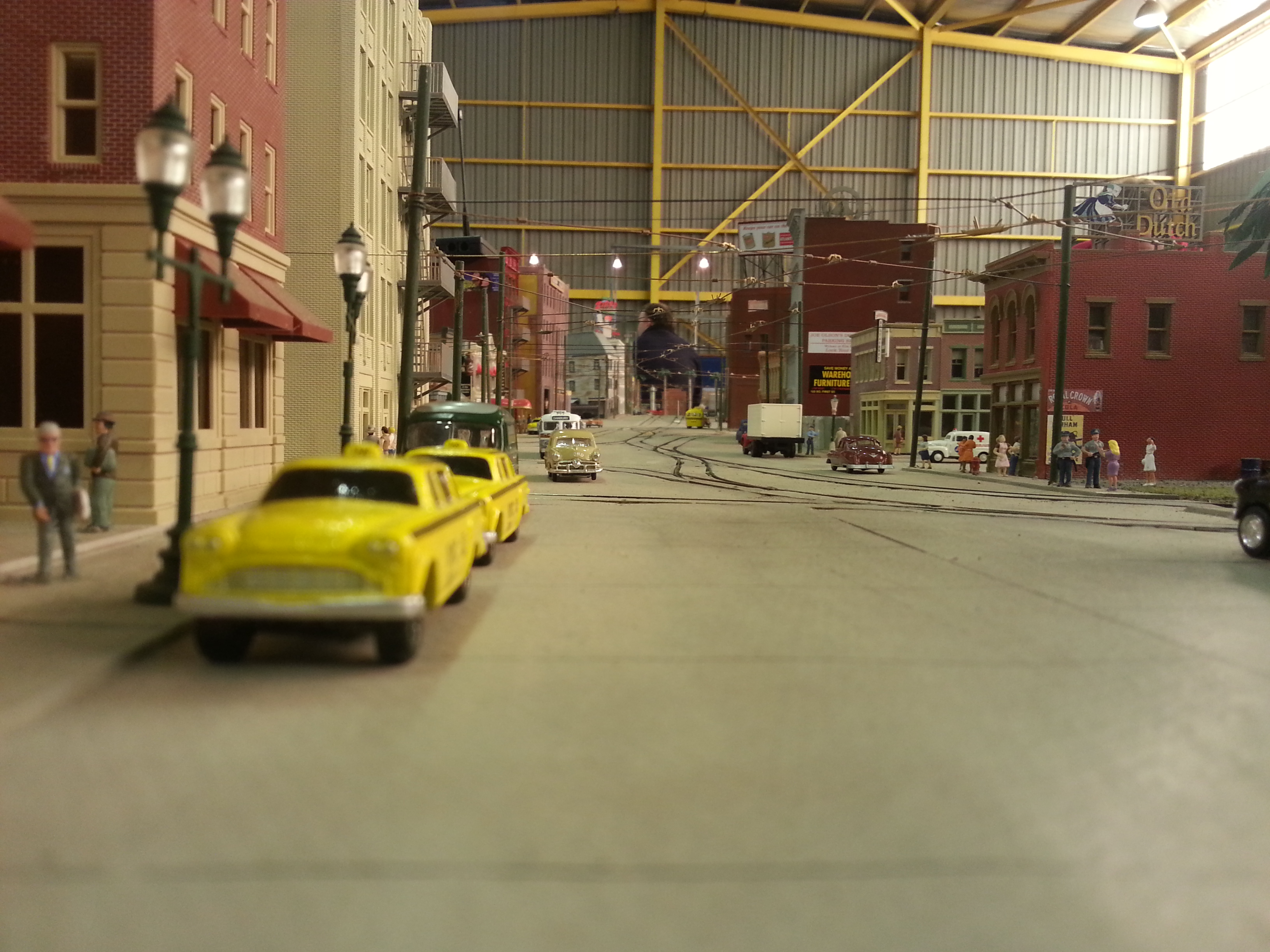
The club has a selection of club and exhibition layouts. Among my favourite layouts is the Phoenix Electric layout.

20130608_102024

 Image 1: A scene on the Phoenix Electric HO scale layout

When I last talked to the club members in 2014 this layout had been retired. Last year saw the first outing of their N scale exhibition layout. This was lacking from the show this year which I found surprising.

Overall there were fewer layouts this year than in previous years. Visitor numbers however appeared to be up, and the Sunday was very busy. You can see the pictures taken on the Gallery page [+ Link].

Site seeing – June 6 and 7 – SUFE – what it is and why we’re dealing with it

Unlike my other posts this one is extremely personal. My aim is to highlight a condition that is affecting children around the world and that has serious repercussions for their long term health, physical and mental, and their long-term well being. They say that we know around 2500 people as friends, relatives, neighbours and acquaintances.

SUFE affects approximately 10 per 100,000 children. SUFEs are most common in adolescents 11–15 years of age and affects boys more frequently than girls. The left hip is more often affected than the right. Over half of cases may have involvement on both sides (bilateral). The chances are that someone in your sphere of influence knows of or has a child suffering with SUFE.

Our story

When my daughter was only 12 she had her SUFE; not only did she have this serious medical condition, but also Avascular Necrosis – the most serious form of the disease. She turns 17 later this month and her youth has been unlike that of most of her contemporaries. She had complained of a sore knee for perhaps 3 months before the onset of SUFE and we attributed it to her love of Netball; unfortunately we were wrong in our understanding and assessment.

Just after her 12th birthday, we heard the femur and the ball in the hip part company, it sounded like a snap of the fingers. It is a sound that I hear every night. I relive that moment often. What followed was a journey of ambulances, hospitals, hip surgeries, screws, pins, scars, tears, pain, long and painful physio, recoveries and the incredible guts, determination and bravery of the young woman who carries my genes forward.

This last Friday and Saturday she and I spent more time together in Melbourne’s Royal Children’s Hospital in Melbourne for what we hope is her final teenage surgery. We think that the next surgery for my daughter means a total hip replacement. Her surgeon and her mother and I are all hoping that we can stave this off for as long as possible. Right now our aim is to get her to 25 before that surgery. But nothing in life is a certainty.

Site 1: What is a SUFE [+ Link]

According to the website of her surgeon Slipped Upper Femoral Epiphysis (SCFE or SUFE) is a very common condition in the rapidly growing child. It results in effect a slippage of the femoral head (ball) from the rest of the femur. It is like a fracture through the ball/neck junction, but it behaves very differently. This is due to weakness of the growth plate. Most often, it develops during periods of accelerated growth, shortly after the onset of puberty.

Site 2: What is Avascular Necrosis [+ Link]

Avascular necrosis (AVN), also called osteonecrosis, bone infarction, aseptic necrosis, and ischemic bone necrosis, is cellular death (necrosis) of bone components due to interruption of the blood supply. Without blood, the bone tissue dies and the bone collapses. If avascular necrosis involves the bones of a joint, it often leads to destruction of the joint articular surfaces. Read more about it at the link above.

What we can all do about SUFE and other diseases like them

The best way we can find cures and better treatment regimes for our children and grand children is to make sure that our local Children’s Hospital gets fully funded. That means raising funds and awareness of the medical needs of children. My wife Jan has worked with our local, state and federal politicians to advocate for the disease to be recognised as a critical care incident, and to make sure that it is considered as a serious long term problem that needs to be addressed.

Each year our family help the Royal Children’s Hospital in Melbourne by assisting with the Good Friday Appeal [+ Link]. In addition to raising funds on the streets of Melbourne, we also as a family donate to the cause that has given so much back to our daughter.

Further Reading and Resources

From the Royal Children’s Hospital website:

Alex’s Surgeon’s SUFE Page

A UK website on SUFE

Final words

There is nothing worse than planning for the worst, while hoping for the best. It is soul destroying, despite being very pragmatic. Alexandra has been through so much in her life. So far she has spent more than a day and a half (about 37 hours) on the operating table to try and save her hip. Despite all our best efforts her Doctor’s have advised that her hip is old and aged, and they cannot give her any real idea of when it will fail.

It’s not often that I’ve seen someone given bad news take it so well. Even more so when you are almost 17 and looking forward to your Debutante’s ball. Last night she cried long and hard. Tonight and in a different way it is my turn. Thanks for letting me cry out.

Site seeing – June 3

I’ve made mention and blogged about weathering on the HVL before. I consider good weathering to be the epitome of model railroad painting and finishing. Without some weathering freight cars and passenger cars simply do not look lived in, run and used. Thus on to today’s site…

Site 1: Model Railroad Hobbyist Forum – Weathered Covered Hoppers for the L&IN [+ Link]

Do I need to say any more?

Make sure your Tetanus shot is up to date, put on your overalls and get stuck into this thread. Amazing stuff and Tom Johnson’s tutorial is outstanding.

You can skip straight to the tutorial by clicking the link here: [+ Link]. My advice thought is not to. This thread is like a great steak, or a nice chocolate cake, it should be enjoyed, and not devoured.

All the best and read the entire thread, this is really a master class in weathering in Oils.

Site seeing – June 2

Small layouts ‘can’ present a problem should the builder underestimate the impact of the types of industries chosen for the layout. For example, a grain elevator may have 20 car spots to be either loaded or unloaded. It sounds like a lot of work to get that grain elevator switched out. However, unless there’s specific switching movements required this job could well be long (as you wait for the first car to be loaded or unloaded, then move forward, and repeat the process over again) and could turn out to be very boring.

NOTE: There is an example of one such elevator in Melbourne, Victoria that I’ll share that proves the exception to the rule.

On the other hand, a single siding with say six spots, each having a specific commodity billed to the spot, can need more brain power and work to complete in a session. This  may provide the answer those who are looking to add more play value in the game that we call Model Railway Operations.

Site 1: Spot order and small layouts [+ Link Here]

Recently on the Port Rowan blog, Chris Mears talked about this same issue. In this post he describes what simply the concept I mentioned above and gives some great references for you to take away and think about for those industries on your own layout.

I hope that you enjoy the read. If you do leave a comment for Chris. He loves them and answers every one.

Site seeing – June 1

Over on Gene’s P48 (Proto 48 – Fine US O Scale) blog he’s building the first of a series of Wilson meat reefers.  Today’s first post provides some information about the series of cars that he is building. The following articles are bringing the build process up to date so far.

While the articles are about building a car in American Proto 48 O Scale there is much to be learned about scratchbuilding from gene that can be applied to any scratch build or bash project you might have in the work. Take the time and take a look around. I’ll be applying the techniques Gene’s been writing about to my future modelling work.

Site 1: Commentary – Meat Reefers [+ Link Here]

This article provides a run down of the types of reefer and some of the inaccuracies in existing models of this type.

Site 2: Modeling: Meat Reefers [+ Link Here]

This is the first article on building the reefer. The focus of this article is on the basics of the design and starting the body.

Site 2 Modeling: Next step on the reefer [+ Link Here]

The second article focuses on the steps to complete the basic body. This includes some really great ideas on how to complete the sub-roof for structural integrity and the visible roof.

Site 3: Modeling: Refining the door and the roof [+ Link Here]

In the third instalment of this series Gene focuses on fixing a problem with the door, take note, after he had already built it, and focuses on refining the final roof structure.

Site 4: Modeling: Simple Fixture for Roof [+ Link Here]

Gene shows the fixture he built for measuring and cutting the roofing boards.

Site 5: Modeling: Wilson Underframe Construction [+ Link Here]

Gene goes on with the build this time focusing on the under frame.

Site 6: Modeling: Progress on the Wilson reefer [+ Link Here]

Gene continues with the under frame, focusing on building the bolsters.