A tuning fork just begging to be modelled

Introduction

If you have not seen a tuning fork layout, it is a very simple 1 turnout operation. If you are still not seeing it in your mind, think of the letter ‘Y’. Most of the layouts I’ve seen assume either a mainline and a siding, or two sidings. However, that does not mean little operational potential. I found a video by Thornapple River Rail Series on YouTube [Link is below] this week and it got the creative juices flowing.
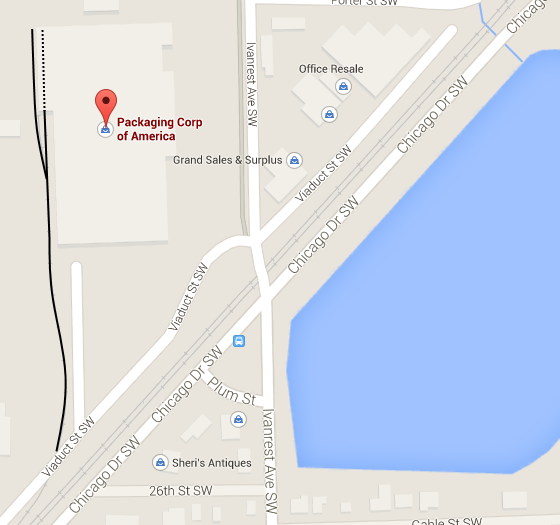
Packaging Corp of America - Grandville MI

Image 1: The location of the facility from Google Maps

The kicker is that the second of the spurs is used to allow switching to take place on the spur itself. Before you do any more reading watch the video (It is 18 odd minutes long but if you start at about the 4:36 minute mark you’ll get the gist pretty quickly).

Video 1: thanks to Thornapple River Rail Series

Operations

If you start at about the 4:40 mark into the video you’ll see the following occur:

  • Loco and first three cars cut off from the train
  • Same pulls forward of the spur switch, and reverses across Viaduct St SW toward the plant
  • You’ll notice the second spur on the outside of the plant as the train pushes back toward the plant
  • Once the roller door comes up, the train pushes back into the dock area, picks up the outbound cars, and pulls forward again to clear the switch for the spur
  • Next, the outbound cars get pushed onto the exterior spur
  • Inbound cars get pulled forward onto the spur again, the switch is reset, and the inbound cars are pushed back into the dock
  • Loco cuts off, pulls forward to clear the switch, and once changed over, pushes back to hook on and pump up the air on the 3 outbound cars
  • Pulling forward the loco and three outbound cars cross over the road and re-join the train
  • Just to add the cherry on top, the train then reverses back to the yard with the engineer riding the caboose

Now all of this takes between 10 – 14 minutes of video time. But what a fantastic way to spend your 5-20-5 minutes of daily modelling / operating time (read a post on that concept here).

If you want to make it last a little longer, first re-arrange the incoming cars into the order as required by the plant. Additionally some cars may not be unloaded yet, and they need to be moved off-spot, and then back on again with new inbound cars. Some cars may need to be left off-spot on the exterior spur for the next switching session.

Layout idea

While I mainly model in HO my true passion is 0 scale (and bigger when I can manage it). Alas I have not the room for a big layout to run those sized trains – yet.
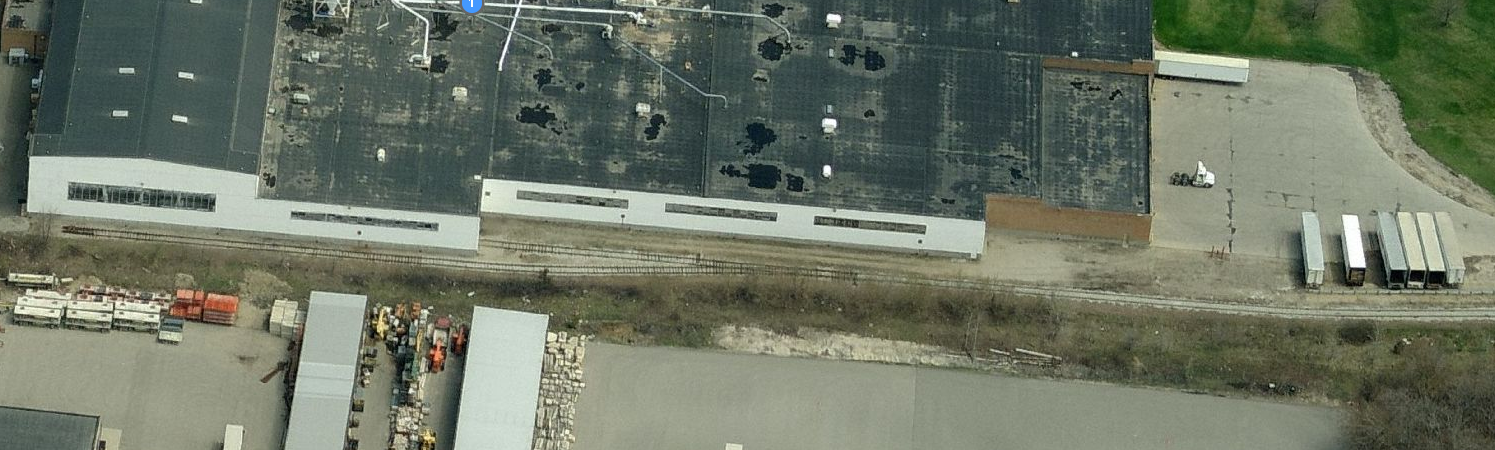
The layout - via BING Maps

Image 2: The complete layout (click for a larger version of the file)

For an 0 scale layout I cannot think of a better idea. You could easily do that in 12 feet and no more than 12 inches wide. If you really had the room you could do it in 18 inches wide and go nuts with weathering, winter trees as in the video, and the knocked over Armco barriers. Glorious! The big gotcha here is that the switching lead ahead of the switch has to be longer than 2x the maximum number of cars you switch into the dock. Don’t forget to add a loco length on top of that too.

So if you switch in 3 cars and out 3 cars you’ll need to have six spots plus a loco length to allow the switching to take place.

Hope that this gets your creative juices flowing. And thanks to Thornapple River Rail Series for posting the video. I am going to be looking through a bunch of his videos now for other similar ideas for my layouts in the future.

It’s a sunny and pleasant Saturday afternoon in Ballarat, hope you’re enjoying your day where you are.

Resources:

Google Maps: Location

Bing Maps:     Location

Site seeing

Hard to believe that we are at the end of January already; 1/12th of the year has already sped by.

While tooling around the web I found the following sites of great interest, and hope that you will find them useful and informative too:

Brian Fayle’s website (http://www.brifayle.ca/2abaseshadows.html) – I’ve followed Brian’s website since late 2003. I especially enjoyed his unique approach to figure painting. He starts from black and builds colour up layer upon layer, ensuring that shadows are a part of the painting process. Follow the link and enjoy a really good read. While you are there, take a look around at his range of layouts built over the years.

A new layout found on BigBlue Train forums: Bushwick Terminal (http://bigbluetrains.com/forum/viewtopic.php?f=46&t=6560). Some really great ideas on layout design and the layout itself is going to be really good to watch come to life.

All the best on a beautiful Saturday afternoon.

Andrew


A new video on Brett

Martin Hogg has been busy working on Brett (the small footprint switching layout I’ve discussed in the past). In this new video he’s posted today there’s work going on a-plenty.

First there’s new lighting, fences being pulled down for a repaint, a forest has sprung up, and weeds have taken root around the Co-Op. Most importantly there’s the promise of another video in the near future.

Enjoy watching the latest installment of Brett.


Seven minutes and fifty-three seconds

Chris Mears has posted another thought provoking article, this time based on the Claremont and Concord (written about as a project layout in Model Railroader some time ago). This time on a subject close to my heart – real time switching, and how watching how the big-boys do it can give you ideas for slowing down the Nascar switching on your own layout. It’s a great video, and well worth watching in it’s own right. And it follows on from the 5-20-5 minute post. Enjoy

Chris Mears's avatarPrince Street

Last year I wrote about the 5-20-5 minute idea and how much I enjoyed running regular, albeit short, operating sessions on my last layout. How much can you do in twenty minutes?

The above video was shot on the Claremont-Concord at West Lebanon. The video runs just under eight minutes in length. It has been edited from its original length but is a terrific record of just how long each movement takes and the pace of working a simple yard. Why not use the video itself as a measure of what can be accomplished in that same period of time on the model?

View original post

5-20-5

For the last several years I’ve not had a dedicated modelling space. This means that I have to beg, borrow, and often steal space and time from the family to build, detail and otherwise do anything model.
Chris Mears on his Prince Street blog wrote about this back in 2013.

It is a great article and I thought I’d share it with you here.

Chris Mears's avatarPrince Street

I’ve mentioned the “5-20-5” concept before and the more I think about it the more I like it. The idea itself refers to three distinct blocks of time totalling thirty minutes and representing an acheivable length of time to either build a model or operate your model railway. It’s based on things like the length of a typical television program or time we might otherwise spend surfing around on the internet and asked if this might be enough time to invest in this great hobby. We often complain that we simply don’t have the time to build a model or can’t imagine having enough time just sit down and run a train.

The first block of time is about five minutes in length. Take five minutes, get out some tools and a model and get ready to work on it. Obviously building a dozen turnouts might be out of the…

View original post 605 more words